The Box Comes Back: What Your Returns Pile Is Secretly Trying to Tell You
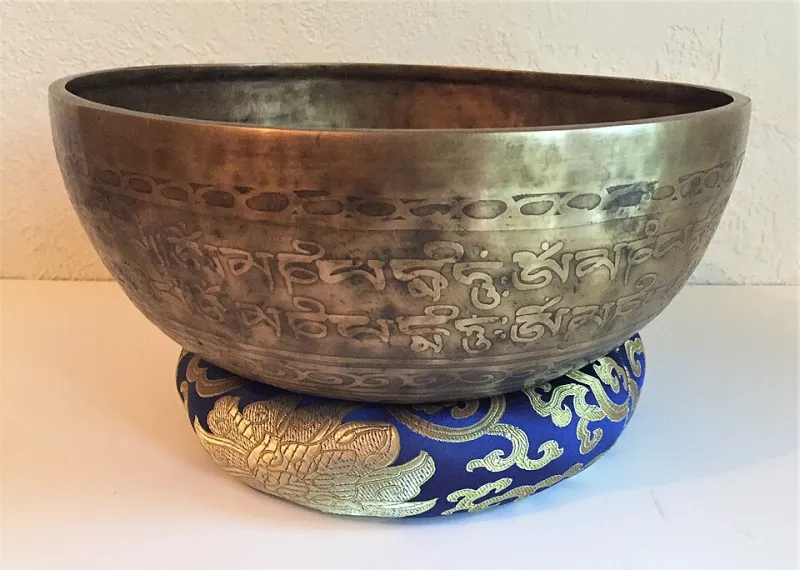
Photo: PLBechly, CC BY-SA 4.0, via Wikimedia Commons
Somewhere in a warehouse in Reno, Nevada, there is a shelf of returned singing bowls. Struck once, maybe twice. Still holding the vibration of the three minutes someone spent with it in their living room before deciding it wasn't working.
Not working at what, exactly? That's the question nobody asks at the return counter.
The Bowl That Was Supposed to Fix You
Here's a confession from my own purchase history: in 2022, I ordered a hand-hammered Tibetan singing bowl from a small importer in Portland. I had watched exactly one video of a monk striking one, felt something loosen in my chest, and clicked buy with the unspoken expectation that this object would do that to me, on demand, forever.
It arrived. It was beautiful. I struck it. It sounded like... a bowl.
I returned it. The reason field on the return form said "not as described," which was a lie. It was exactly as described. It just couldn't do the thing I'd hired it to do — which was to make me a different person.
If you've ever sent back a meditation cushion, a crystal, a hand-poured candle, or a mala you were convinced would finally make your mornings feel sacred, you already understand the strange bargain we're making. We're not buying objects. We're buying versions of ourselves. And when the object fails to deliver the new self, back it goes.
Sellers See It Coming
Maya Rodriguez has run a mindful goods stall at farmers markets across the Bay Area for nine years, and she can spot a doomed purchase from across the aisle.
"There's a look," she told me. "Someone picks up a smudge stick or a brass bell and their eyes go soft. They're not seeing the object. They're seeing the life they'll have with it. The slow mornings. The calm. And I've learned to gently ask: what does your morning actually look like right now?"
About half the time, she says, the question stops the sale cold. The other half, it starts a real conversation.
Online sellers of spiritual goods report a peculiar pattern in their return data: the highest return rates aren't on the cheapest items or the shoddiest ones. They're on the items with the biggest promises attached in the buyer's imagination. The $180 singing bowl comes back more often than the $18 incense holder. The bigger the hoped-for transformation, the shorter the honeymoon.
One artisan who sells meditation benches on a cooperative platform put it to me bluntly: "People return my benches saying they 'didn't stick with meditation.' I make furniture. I can't make the sitting happen."
Buyer's Remorse as a Teacher
In most of consumer America, a return is a failure — of the product, the marketer, or the shopper's willpower. But there's another way to read that moment of second-guessing in the parking lot or at the doorstep.
The return is the one moment in the buying cycle when we're forced to tell the truth. The purchase itself runs on fantasy — the fantasy is the point, the fuel, the marketing engine. But the return requires an admission: this didn't do what I needed, because I didn't actually know what I needed.
That's not a checkout failure. That's the beginning of practice.
Buddhist teachers have a concept that maps onto this almost uncomfortably well: the difference between the finger pointing at the moon and the moon itself. The bowl, the cushion, the candle — fingers. The stillness you wanted — moon. We keep returning the fingers and wondering why we never got to the moon.
The Return Policy as Modern Ritual
Consider what a generous return policy actually is, stripped of commerce-speak: an institutionalized act of grace. You acted in hope. The hope didn't land. You may un-make the act, no shame attached.
Most religious traditions have some version of this. Teshuva in Judaism — return, literally — is not viewed as failure but as a built-in feature of being human. Catholic confession exists because the Church assumed people would miss the mark, repeatedly, and made room for it. Even the Hindu festival of Holi burns the old year's residue to start clean.
The American return window — thirty days, ninety days, whatever the fine print says — is a secular echo of the same architecture. We just rarely treat it with the reflection it deserves. We treat it as logistics. The box, the label, the drop-off at the UPS store between errands.
What if the return were slower? What if, before you printed the label, you sat with the object for one more evening and asked: what was I actually shopping for?
Three Questions Before the Label
I've started keeping a small ritual around returns, and it has changed what ends up in my cart:
1. What was the feeling I was buying? Not the object — the feeling. Was it calm? Belonging? Permission to rest? Name it honestly.
2. Can this object actually produce that feeling, or was it always going to come from somewhere else? A cushion can support your sit. It cannot make you a person who sits.
3. Is there something here worth keeping anyway? Sometimes the answer is yes. My mother returned a brass statue once, then ordered it again six months later — not because she'd changed, but because she'd stopped expecting it to change her. She just liked it. That's allowed. Liking things, plain and uncomplicated, is underrated.
The Shelf in Reno
I think about that warehouse shelf sometimes. All those bowls, barely struck, waiting to be resold at a discount to the next hopeful person. There's something sad about it, but also something almost tender — a whole chain of strangers passing the same longing back and forth, each convinced the object was the missing piece.
The longing isn't the problem. The longing is honest. It's the oldest thing about us.
The practice is just this: to notice that no object, however sacred its origin, however handmade its story, can carry the full weight of what we're asking it to carry. Some things you send back. Some things you keep because they're lovely. And the hunger underneath both decisions — that's the real material you're working with.
Strike the bowl. Listen. Then go sit down, with or without it.