The Object Remembers: What Inherited Malas and Estate-Sale Singing Bowls Are Trying to Tell Us
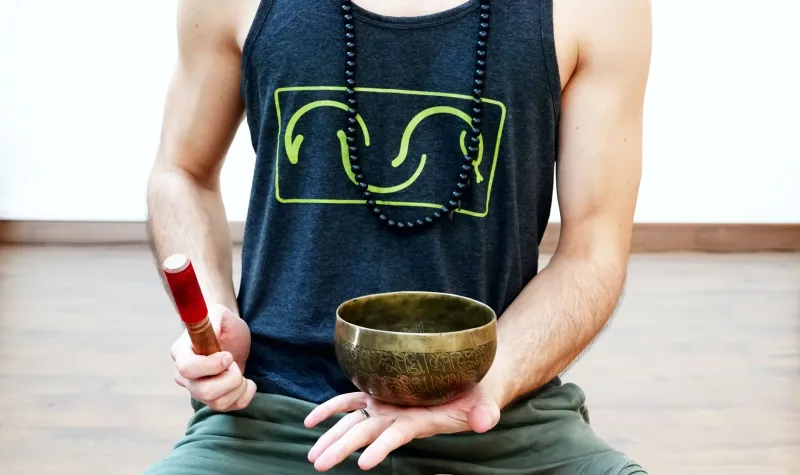
The mala was still knotted, the tassels soft from years of thumbing. Mara Chen found it at an estate sale in a Minneapolis suburb, in a bedroom the family had labeled simply "mom's room." The woman who owned it had practiced with it for four decades. Her children, clearing the house in a weekend, priced the whole lot at fifty dollars.
"I stood there holding it and thought, this doesn't feel like shopping," Chen says. "It felt like being handed something."
Chen isn't alone. Across the country, a growing number of Americans are sourcing their spiritual tools secondhand — inherited prayer beads, singing bowls from estate auctions, tarot decks bought used on Facebook Marketplace, altar cloths with someone else's candle wax still on them. And it's raising a question that sounds small but isn't: can an object's meaning survive a change of hands?
The Estate Sale as Unlikely Pilgrimage
Spend a Saturday morning at enough estate sales and you notice a pattern. The kitchen gets picked over for cast iron. The garage gets stripped of tools. But the room with the meditation cushion, the devotional statues, the shelves of well-worn books — that room draws a different kind of shopper.
"People linger in there," says Devon Ruiz, a reseller in Asheville, North Carolina, who specializes in ritual goods. "They ask questions. Who used this? What was it for? Nobody asks that about a bread maker."
Ruiz started reselling spiritual items after inheriting a houseful of them from an aunt who practiced Tibetan Buddhism. At first, she listed things online like anything else. Then buyers started writing back — not to complain, but to tell her what the objects were doing in their lives. A bowl purchased as a gift became the centerpiece of a grief ritual. A battered statue went to a veteran with PTSD.
"That's when I stopped calling it resale," Ruiz says. "These things are being rehomed. There's a difference."
Does Meaning Transfer, or Does It Start Over?
Ask three practitioners and you'll get three answers, which is probably the honest answer.
Some traditions treat ritual objects as charged — vessels of accumulated intention that shouldn't casually change owners. Others hold that objects are containers, and a new person fills them with new practice. Most land somewhere in between: the object carries a story, and the story matters, even if the energy itself is yours to renew.
What almost everyone agrees on is that intention in the transfer matters. An object passed along with care — explained, honored, offered rather than dumped — arrives differently than one scooped up in a box lot.
"Think about a violin," says Dr. Adaeze Nwosu, a scholar of material religion. "A 200-year-old instrument isn't haunted by its previous players. It's enriched. Its sound carries their history. But you still have to learn to play it yourself."
How to Receive a Secondhand Ritual Object
If you're drawn to pre-owned spiritual goods, a little ceremony goes a long way. Practitioners and resellers offered a rough consensus:
Learn what you can about where it came from. Ask the seller, the family, the estate organizer. Even one sentence of provenance — "she used it every morning for thirty years" — changes your relationship to the object.
Cleanse it in whatever way is authentic to your practice. Sound, smoke, salt, sunlight, moonlight, plain soap and water. The method matters less than the pause it creates. You're marking a threshold: this object is entering a new chapter.
Don't pretend it's new. The scuffs, the worn spots, the bead polished dark by someone's fingers — these aren't defects. They're evidence of use, which in a disposable economy is nearly a sacred texture.
Use it, or pass it on. The worst fate for a ritual object isn't a second owner. It's a shelf, acquired and forgotten. If it doesn't call to you, find someone for whom it will.
Respect the source tradition. This is the line Ruiz won't cross. Some items — certain Indigenous ceremonial objects, for instance — shouldn't be sold or traded at all, and secondhand markets can be where stolen sacred items quietly circulate. "If you don't know what it is, don't guess," she says. "Ask, or walk away."
Why This Resonates Right Now
There's a larger story here about American hunger. We're a country drowning in new things that mean nothing and quietly starving for old things that mean something. A new mala arrives in plastic. A secondhand one arrives with an invisible lineage — someone's doubts, someone's devotion, someone's ordinary Tuesday mornings.
It's also a quiet rebuke to the wellness industry's obsession with the pristine. The crystals in the boutique are graded, cleansed, merchandised. The bowl at the estate sale has a patina no brand could manufacture. One is a product. The other is a companion.
Chen still uses the mala she found in that Minneapolis bedroom. She doesn't know the woman's name — the family didn't offer it — but she talks to her anyway, in her head, during long sits. "I tell her I'm taking care of it," she says. "It sounds silly. But the beads feel warmer than any I've bought new."
Maybe that's the whole answer. Objects don't hoard meaning like a savings account. They hold it the way a riverbed holds water — shaped by what flowed through, ready for what comes next. When an object outlives its first owner, it doesn't lose its story. It gains a second one. And stories, unlike stuff, are the one thing we never seem to have enough of.