Thirty Days of Wanting: The Slow-Purchase Experiment That Changed How I Shop for the Sacred
The rule was simple, almost embarrassingly so: if I wanted to buy something for my spiritual life — a crystal, a candle, an online course on shadow work, a deposit on a weekend retreat — I had to write it down and wait thirty days before purchasing.
That's it. No budget freeze, no Marie Kondo purge, no vow of poverty. Just a pause.
I'm calling it the slow-purchase experiment, and I ran it for one full season, from the first cold snap in October through the depths of a gray Midwest December. What I learned in those ninety-ish days rearranged something in me — not just about shopping, but about the difference between wanting something and being called to it.
The Cart That Never Slept
Let me be honest about where I started. My Amazon wish list was basically a shrine. My Instagram saved folder was a museum of future intentions: the rose quartz tower I'd definitely start meditating with, the breathwork masterclass I'd totally finish, the hand-poured palo santo alternative from a shop I trusted (or thought I did).
The wellness industry knows something about people like me. It knows that spiritual longing feels urgent. It knows that a well-timed ad — your energy is blocked, fix it now — can convert yearning into a checkout click faster than almost any other emotion. Desire plus insecurity plus a Buy Now button is a very old recipe.
And I clicked. A lot. Usually late at night, usually after a hard day, usually with the vague hope that the next purchase would finally be the one that made me feel whole.
Spoiler: it never was.
The Rules of the Pause
Before I share what happened, here's the exact framework, in case you want to try your own version:
- Write it down. Every desired purchase goes in a note on my phone: item, price, date, and — this is key — why I wanted it, in one honest sentence.
- Wait thirty days. No exceptions for sales, no exceptions for "limited stock," no exceptions for "but the retreat fills up fast."
- Revisit on day thirty. Reread my original reason. Ask one question: Do I still want this?
- Decide slowly. If yes, I buy it — guilt-free, often with more intention than I'd have had before. If no, I delete it and notice what that feels like.
The point was never to stop buying sacred goods. I love this stuff. I work at a marketplace built on it. The point was to find out which desires were real.
What the Waiting Did
Roughly 70% of my wants evaporated
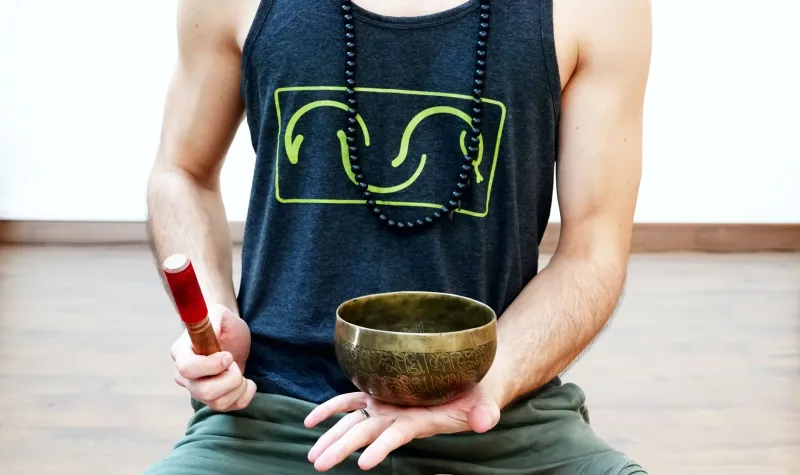
I tracked nineteen potential purchases over the season. Fourteen didn't survive the thirty days. Some I simply forgot about — which told me everything. A few I looked at on day thirty and felt a small, embarrassed shrug. Why did I want a third singing bowl? I already owned two I barely touched.
The purchases that died in the waiting room had a pattern: almost all of them were bought-to-be-solved. I wanted the crystal because I was anxious. I wanted the course because I felt behind. I wanted the retreat because I was lonely. The objects weren't the desire — the desire was a feeling I was trying to outsource.
The things I still wanted were usually things I actually needed
Four purchases made it through. One was a plain, unglamorous meditation cushion, because my back hurt sitting on the floor and my practice was genuinely suffering. One was a locally made beeswax candle set for a friend's grief ritual. One was a book I'd thought about every week for a month. And one was a deposit on a weekend retreat — which I attended, and which mattered.
Notice what survived: things tied to practice and relationship, not to fixing a feeling. When a desire survives thirty days, it tends to have roots.
Waiting changed my relationship with urgency itself
This was the unexpected part. Somewhere around week three, I started noticing how manufactured urgency feels when you're watching for it. "Only 3 left!" "Sale ends tonight!" "Doors close at midnight!" The wellness market runs on the same scarcity mechanics as sneaker drops. Once you see the machinery, you can't unsee it — and the machinery loses its grip.
Calling vs. Craving: A Field Guide
After three months of this, here's the distinction I'd offer, for whatever it's worth:
- A craving has a deadline. A calling doesn't. The retreat that's genuinely for you will still be meaningful if you go next year. (If it truly won't, ask why the scarcity exists.)
- A craving wants the object. A calling wants the practice. If you want the crystal but not the sitting, that's décor, not devotion — and that's fine, but name it honestly.
- A craving spikes at night. A calling is patient at noon. Nearly all my doomed purchases were 11 p.m. desires. The things that survived were things I wanted just as much in daylight, on an ordinary Tuesday.
- A craving promises transformation. A calling assumes you'll do the work. Nothing you can buy will do your healing for you. Anyone selling you that is selling something else.
You Don't Have to Be Perfect at This
I broke my own rule twice. Once for a small donation to a teacher whose free content had genuinely carried me through a hard month (I'd call that a good exception — reciprocity isn't impulse). Once for a candle I bought at 10:47 p.m. because it smelled like my grandmother's house. Was that dopamine? Maybe. Was it also grief, and love, and memory? Also yes. I don't regret it.
The slow purchase isn't a moral law. It's a mirror. It just holds up the wanting long enough for you to actually see it.
And here's the thing I didn't expect: the waiting itself became a practice. Checking the note on day fifteen. Noticing the wanting loosen. Realizing I could feel a pull toward something and not act on it — that I could be a person with desires who wasn't ruled by them. That, it turns out, is most of what meditation was supposed to teach me anyway.
The sacred doesn't need two-day shipping. It's been waiting for you the whole time.