Five Questions to Carry in Your Pocket: A Shopper's Field Guide to Ethical Spiritual Goods

Photo by Photo by Yusuf Onuk on Unsplash on Unsplash
There's a particular kind of vendor at Dharmatala — the crowded commercial heart of Kolkata — who will look you dead in the eye and tell you which goods in his stall are genuine and which are tourist bait. He doesn't have to do this. His neighbor three stalls down certainly doesn't. But the good ones do it anyway, because in a bazaar where everyone is selling roughly the same brass and beads, honesty is the only real competitive advantage.
Shopping online for spiritual goods in the US is the opposite experience. Nobody looks you in the eye. The product photos are gorgeous, the copy is soothing, and the word "sacred" gets thrown around like confetti at a wellness retreat. So how do you tell the real ones from the tourist bait when the vendor is a checkout button?
You carry questions with you. Five of them, borrowed from the bazaar, adapted for the scroll. Ask them every time.
1. Where Did This Actually Come From?
In a Kolkata market, origin is the first thing you negotiate. Where was the brass cast? Who grew this rice? The answer shapes the price and the story.
Online, origin gets foggy on purpose. A product listed as "Tibetan style" is telling you something important: it's probably not Tibetan. "Inspired by" usually means "not from." Look for specifics — a region, a workshop, a named cooperative. Vague geography is a yellow flag waving gently in the wind.
If a listing says "handcrafted" but can't say where or by whom, that's not craftsmanship. That's marketing.
2. Who Made It, and Are They Treated Like a Person?
At a market stall, the maker is often the seller. You can watch her hands wrap the malas she strung that morning. The transaction carries her face in it.
Etsy and big-box wellness retailers flatten that relationship into a stock photo of "our artisans." Fair trade certification helps, but it's a floor, not a ceiling. Better signals: named makers, artisan collectives, brands that publish their sourcing. If a company won't tell you who made the thing, ask yourself why the answer is a secret.
And no — "ethically sourced" in the product title doesn't count. That phrase is doing a lot of unpaid labor.
3. Is This Object Mine to Buy?
This is the question most American shoppers skip, and it's the one that matters most. White sage smudged into a commodity. Closed practices packaged as starter kits. Ritual items sold with instructions that flatten living traditions into aesthetic props.
The rule of thumb from the market: some things are for everyone, and some things aren't. A good vendor knows the difference and will steer you right. A good product page should too. If an item is culturally restricted, appropriated, or stripped of context, buy something else — there's always something else. Support sellers from within the tradition, or choose goods that are meant to travel.
4. What Is This Object For — and Do I Actually Need That?
Kolkata vendors will happily talk you out of a purchase. "That bowl is for practice, not decoration. You want this one instead." The honest ones would rather lose a sale than gain a confused customer.
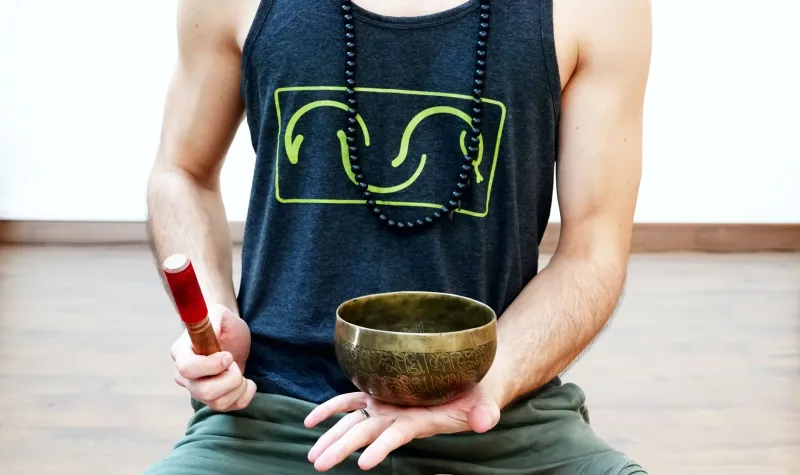
Before checkout, get honest with yourself. Are you buying a meditation cushion or the idea of being someone who meditates? A singing bowl or a personality upgrade? Objects don't do the practice for you. If the product page promises transformation, peace, or a better you in seven days, that's not a spiritual good — that's a infomercial wearing prayer beads.
5. Does the Price Make Human Sense?
Here's a truth the market teaches fast: a hand-carved object that took someone forty hours cannot honestly cost $19.99. When a price feels impossibly low, someone in the chain is absorbing the difference — usually the maker, sometimes the earth, occasionally both.
Price isn't just what you pay. It's what you're saying about what hands and hours are worth. Cheap is often the most expensive thing you can buy.
Your Pocket Checklist
Screenshot this. Tape it inside your notebook. Run it on any product page:
- Origin: Is a specific place, workshop, or region named?
- Maker: Is there a human being (or named collective) behind this?
- Consent: Is this object meant to be sold to me, or am I buying someone's tradition without invitation?
- Purpose: Do I know what this is for, and does that purpose match my actual life?
- Price: Does the cost reflect real hands and real hours — or is someone being erased?
Five yeses? Buy it, and feel good about it. A few no's? Keep scrolling. The right vendor — the one who'd look you in the eye at a crowded stall and tell you the truth — is out there, and they deserve your money more than the ones hiding behind pretty photos and soft lighting.
That's the Dharmatala test, really. Not a rulebook. Just the questions a good market neighbor would ask on your behalf, translated for a world where the market fits in your pocket.