Listen Before You Buy: A Field Guide to Singing Bowls That Actually Sing
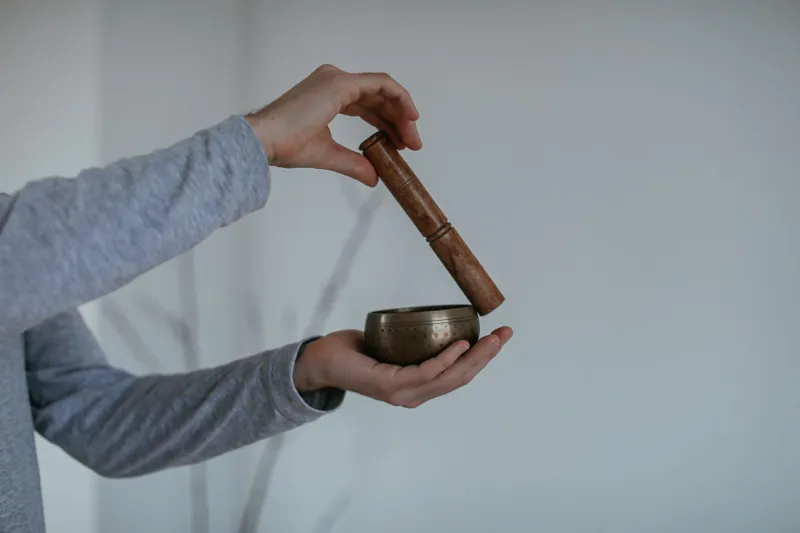
Walk into almost any wellness shop in Austin, Asheville, or Portland these days and you'll find them: rows of gleaming brass bowls stacked on shelves, a mallet resting on top like an invitation. Some of them sing. Some of them, honestly, just clunk.
The difference matters more than most shoppers realize — sonically, ethically, and spiritually. And in a market that's grown faster than the knowledge base behind it, the burden of discernment has quietly shifted to you, the buyer. Here's how to carry it well.
The Decor Bowl Problem
Over the past five years, sound healing has gone from niche practice to mainstream offering. Yoga studios run gong baths on Friday nights. Therapists keep bells on their desks. And with that demand came supply — much of it mass-produced, machine-spun, and finished with a polish that photographs beautifully and sounds like a coffee mug.
There's nothing wrong with a pretty object that makes a pleasant ding. The problem is when it's sold as something it isn't. A hand-hammered bowl is a tool shaped by a person, tuned through repeated heating and striking, with a voice that carries the slight irregularities of human attention. A stamped, factory bowl is a product shaped by a die. One was made to be played. The other was made to be displayed.
What Your Ears Can Tell You in Thirty Seconds
If you can hear it before you buy it, trust your ears over the label. A genuine singing bowl should:
- Sustain. Strike it once and listen. A well-made bowl rings for anywhere from thirty seconds to well over a minute, the tone slowly blooming and fading. Cheap bowls die out in a few seconds.
- Hold a single, warm fundamental. You should hear one dominant note with soft overtones layered above it — not a warbling, metallic mess or a clatter of competing frequencies.
- Respond to rim friction. Run the mallet around the outside edge. A real bowl builds a steady, humming tone that seems to grow on its own. A poor bowl stutters, screeches, or produces nothing but friction noise.
- Feel it in your chest. This sounds mystical but it isn't. Low-frequency resonance is physical. If a bowl makes your sternum hum a little, that's acoustics, not magic — but it's the acoustics you're paying for.
The Hands-On Checklist
Beyond sound, a few physical tells separate the handmade from the hollow:
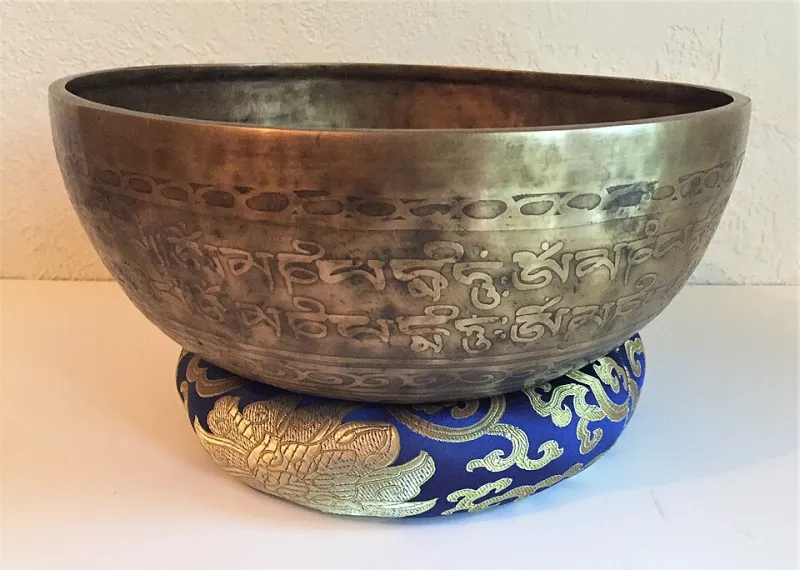
The hammer marks. Hand-hammered bowls show a pattern of small, overlapping dimples — slightly irregular, like ripples in sand. Machine-spun bowls are perfectly smooth. Perfectly smooth is a red flag.
The rim and the base. Handmade bowls often have a slightly uneven rim and a hand-finished base. Mass-produced ones are uniform to the millimeter.
The weight-to-size ratio. Thicker isn't automatically better, but a bowl that feels suspiciously light for its size is usually thin sheet metal, spun fast and finished cheap.
The origin story. Ask where it was made, and by whom. "Tibetan-style" is not an origin. Nepal and northern India produce the vast majority of genuine hand-hammered bowls today; if a seller can't or won't say more than that, that's information too.
What Sellers and Practitioners Wish You Knew
Talk to people who work with these instruments daily and a few themes come up again and again.
Practitioners will tell you that a bowl's voice matters for reasons beyond aesthetics. In a sound bath, the sustained overtones are what guide listeners into that dropped-jaw, softened-breath state. A bowl that fades in eight seconds doesn't fail decoratively — it fails functionally. It's a canoe with a hole in it.
Honest sellers, meanwhile, want you to ask questions. The good ones can tell you which workshop a bowl came from, roughly how old it is, and whether it was cast or hammered. They'll let you play it. They'd rather lose a sale to someone who bought the right bowl than make a sale to someone who bought the wrong one — because that customer comes back, and brings friends.
There's also the ethical layer. Artisan bowl-makers in Nepal are often supporting entire extended families on work that takes years to learn. When a factory bowl sells for the same price as a handmade one, it doesn't just undercut the artisan's livelihood — it erases the craft itself. Every purchase is a vote for which future the tradition has.
A Note on Buying Online
Most of us don't get to strike the bowl first. If you're shopping remotely, buy from sellers who post unedited audio and video of the actual bowl being played — not stock footage. Look for listings that name the maker or workshop. Read return policies carefully; a seller confident in their instruments won't make returns feel like a negotiation. And be skeptical of bargains that seem too good. Hand-hammering takes hours. The price reflects the hands.
The Deeper Point
There's a quiet irony in buying a meditation tool carelessly. The whole point of these instruments is attention — the slow, deliberate act of listening. Let the purchase itself be the first practice. Strike the bowl. Wait. Listen all the way to the end of the sound.
If it was made by human hands, it will hold your attention that long. That's how you know.