What Happens to Your Block When You Buy From a Soul-Centered Shop Instead of Amazon
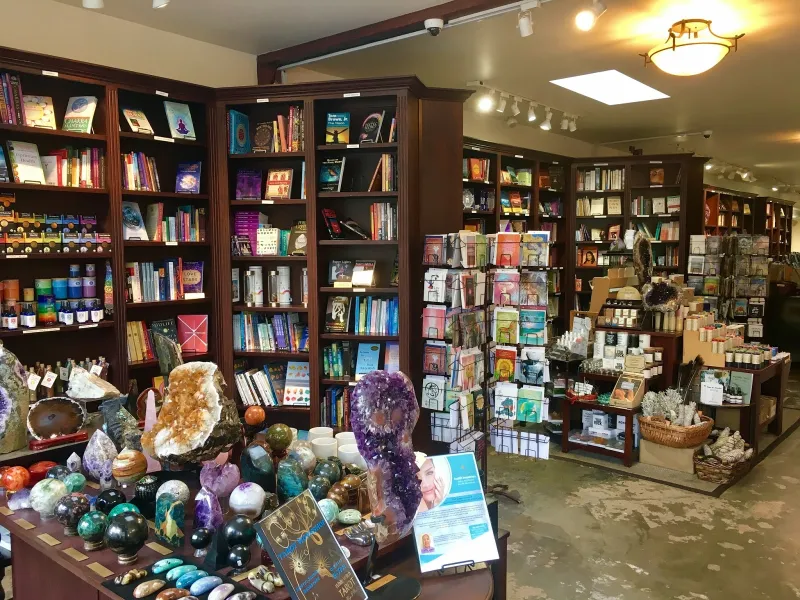
Photo: independent spiritual shop small business neighborhood community artisan market, via 4.bp.blogspot.com
There's a corner in Portland's Montavilla neighborhood that used to be a dollar store. Then it sat empty for two years, windows soaped over, a ghost of the retail apocalypse everyone kept predicting. Today it's a cooperative wellness shop run by a Nepali immigrant family selling hand-knotted singing bowls, ethically sourced incense, and custom altar cloths. On Saturday mornings, there's a line out the door.
That transformation didn't happen by accident. It happened because a cluster of conscious consumers — people who'd been buying spiritual goods online from independent marketplaces, who'd gotten used to asking where does this come from and who made this — decided they wanted that same ethos to exist physically in their city. They showed up. They kept showing up. And the neighborhood changed.
This is what we're calling the Dharmatala Effect: the very real, very measurable ripple that moves through a community when people consistently choose soul-centered, independent sources for their spiritual goods over mass-market platforms.
Money That Stays in the Room
Let's start with the economics, because they matter more than people realize. When you buy a crystal cluster or a hand-dyed prayer flag from a local or independent spiritual shop — whether that's a brick-and-mortar in your city or a small online marketplace rooted in community values — a dramatically higher percentage of that money recirculates locally compared to what happens when you click add to cart on a big-box site.
The American Independent Business Alliance has long tracked what they call the "local multiplier effect." For every $100 spent at a locally owned business, roughly $68 stays in the local economy. Spend that same $100 at a national chain or a mega-platform, and you're looking at closer to $43 staying local. That gap is where neighborhoods either grow or stagnate.
For spiritual and wellness goods specifically, the stakes are even higher — because the makers are often from communities that have historically been economically marginalized. Immigrant artisans. Indigenous craftspeople selling through ethical channels. First-generation small business owners bringing their cultural heritage into product form. When money flows to them, it flows into households and neighborhoods that need it most.
The Storefront as Cultural Anchor
Maria Chen has owned a small spiritual goods shop in Chicago's Pilsen neighborhood for eleven years. She sells a mix of Latinx folk art, Buddhist meditation supplies, and locally made herbal remedies. She's watched the neighborhood shift around her — some of it gentrifying, some of it organizing, all of it in flux.
"My shop is a meeting point," she says. "People come in for copal and stay for an hour talking about what's happening on the block. I've seen friendships start here. I've seen people find their community here. You can't put a dollar amount on that, but it's real."
What Maria is describing is what urban planners call a "third place" — somewhere that's not home and not work, where community identity gets built and maintained. Independent spiritual shops, wellness cooperatives, and conscious marketplaces function this way in a way that Amazon warehouses fundamentally cannot. The physical or community-rooted online space becomes a node in the neighborhood's social fabric.
When those spaces close — or never open in the first place because consumers default to convenience — that fabric frays.
Supporting Artisans Who Carry Living Traditions
There's another layer to this that goes beyond economics and into something harder to quantify but just as important: cultural preservation.
Many of the artisans selling through independent spiritual marketplaces aren't just making products. They're maintaining living traditions — dyeing techniques passed down through generations, sacred geometries encoded in weaving patterns, herbal knowledge that took centuries to accumulate. When those artisans can't make a living from their craft, those traditions don't get passed on. They disappear.
David Runningwater, a Cherokee craftsman who sells ceremonial items through a small collective marketplace, puts it plainly: "When someone buys from me directly, they're not just buying an object. They're making it possible for me to teach my nephew what I know. That's the transaction that actually matters."
Contrast this with the mass-market version of spiritual goods — factory-produced crystals with no provenance, incense blended from synthetic compounds, "handmade" items that aren't — and the cultural cost of convenience becomes visible. Choosing independent isn't just ethically cleaner. It's an act of cultural conservation.
How Online Marketplaces Extend the Effect
Not everyone has a thriving independent spiritual shop in their neighborhood — and that's okay, because the Dharmatala Effect isn't limited to physical spaces. Community-rooted online marketplaces can carry the same energy when they're built intentionally.
The difference between a soul-centered online marketplace and a generic e-commerce platform comes down to a few things: transparency about where products come from and who makes them, active curation that prioritizes ethical sourcing, and a genuine community layer — forums, events, shared values — that makes the platform feel like a place rather than just a transaction engine.
When shoppers consistently use these kinds of platforms, they create demand signals that change what gets made and how. Artisans who might otherwise be squeezed out by mass production get visibility. Buyers who care about provenance find each other and reinforce each other's choices. The marketplace becomes a community, and the community starts to shape culture.
Small Shifts, Real Consequences
Here's the thing about the Dharmatala Effect: it doesn't require grand gestures. It's cumulative. It's the person who, once a month, chooses to buy their sage bundle from an Indigenous-owned cooperative instead of a wellness chain. It's the yoga teacher who sources her altar items from a Nepali family collective instead of a drop-shipper. It's the grief group that buys their candles from a local herbalist instead of a home goods megastore.
None of those individual choices is going to single-handedly revitalize a neighborhood or save a tradition. But collectively, consistently, they do something. The money stays. The artisans keep working. The storefronts fill up. The corners that used to hold empty dollar stores start holding something else — something that reflects the values of the people who live there.
That Nepali family in Montavilla? They just hired two neighborhood teenagers to help on weekends. One of them is learning to tune singing bowls.
That's the effect. That's what it looks like when it works.
Where to Start
If you want to participate in this shift but aren't sure where to begin, start simple:
- Search local first. Before you hit Amazon, spend five minutes looking for an independent spiritual shop in your city — or an online marketplace with transparent sourcing.
- Ask questions. Any seller worth buying from should be able to tell you where their products come from and who made them.
- Prioritize artisan-direct when possible. Buying directly from the maker keeps the most money where it does the most good.
- Spread the word. Leave reviews. Share shops you love. The algorithm rewards volume, so conscious consumers have to be vocal to compete.
Your purchasing choices are, among other things, a form of neighborhood planning. Use them like it.