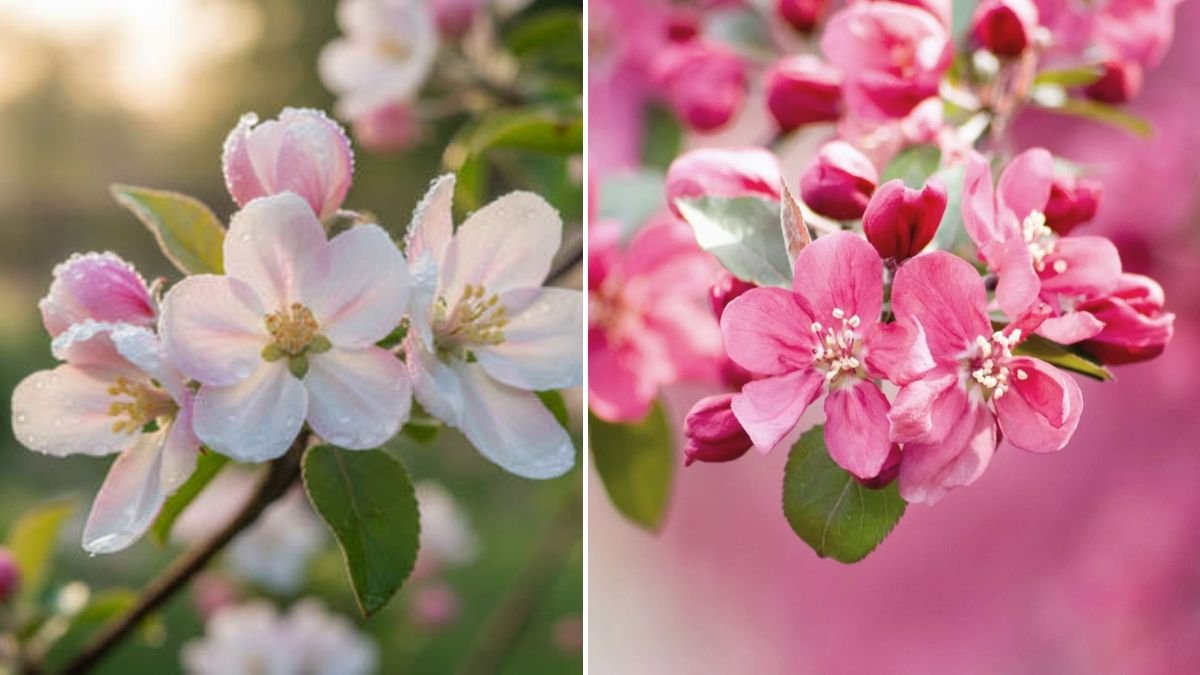

Spectacular Seasonal Beauty
One of the first reasons gardeners fall in love with crabapple trees is their stunning seasonal display. Crabapples bring beauty to the garden throughout the year:
- Spring: Crabapple trees burst into a profusion of flowers in shades of pink, red, and white, creating a dramatic and fragrant display that signals the arrival of spring.
- Summer: Lush green foliage provides shade and a rich backdrop for garden landscapes. Some varieties even offer deep purple or bronze-colored leaves that add contrast.
- Autumn: Leaves change to warm tones of red, orange, or yellow, complementing the vibrant fruit that begins to develop.
- Winter: Small crabapples often persist on the branches well into winter, adding color and interest when most other plants are dormant.
This four-season interest makes crabapple trees not just functional but a focal point in any landscape, enhancing both curb appeal and overall garden enjoyment.
Supports Pollinators and Wildlife
Crabapple trees are ecological champions. Their abundant blossoms provide essential nectar and pollen for bees, butterflies, and other pollinators, helping to sustain local ecosystems. By attracting pollinators, crabapple trees also indirectly benefit other plants in your garden.
After flowering, crabapple trees produce small fruits that are a vital food source for wildlife. Birds such as robins, cedar waxwings, and cardinals feed on the fruit in fall and winter, while small mammals may also rely on it. This makes crabapples a year-round contributor to local biodiversity, connecting your garden to broader ecological networks and supporting wildlife during times when food is scarce.
Planting a crabapple is a simple way to contribute to ecological health while enjoying a beautiful tree in your yard.
Enhances Fruit Production in Nearby Trees
Crabapple trees are often used as pollinators for other fruit trees. Their abundant flowers attract bees and other pollinators that help fertilize apple, pear, and other fruit-bearing trees nearby. Gardeners often report increased fruit yields when crabapple trees are planted strategically near orchard trees.
In some cases, crabapples can increase the fruit set of pear or apple trees by up to 30%. This makes them not only ornamental but also functional, boosting the productivity of your other fruit trees with minimal effort.
Low-Maintenance and Adaptable
Another advantage of crabapple trees is their adaptability and ease of care. Many modern cultivars have been bred for resistance to common diseases such as apple scab, fire blight, and powdery mildew. This means healthier trees with less intervention, saving time and money while ensuring long-term performance.
Crabapples tolerate a wide range of climates and soil types, including urban conditions with compacted soil. Once established, they require little maintenance beyond basic pruning to maintain shape and encourage airflow, watering during dry spells, and appropriate site selection in full sun. This adaptability makes them suitable for a wide variety of landscapes, from small city yards to larger suburban gardens.
Edible Uses and Versatility
Although many crabapple varieties are too tart to eat raw, their fruit is highly versatile. High in pectin, crabapples are excellent for making jellies, jams, sauces, and even cider. Their tart, slightly sweet flavor can add depth and complexity to preserves, providing a culinary benefit beyond aesthetics.
Even if you don’t plan to harvest or cook with the fruit, it still supports wildlife, adding ecological and visual value to your property.
Environmental Benefits
Crabapple trees provide significant environmental benefits. Their roots help prevent soil erosion, their foliage absorbs carbon dioxide, and the canopy contributes to shade and cooling, helping mitigate the urban heat island effect in cities and neighborhoods.
Additionally, by attracting pollinators and supporting wildlife, crabapples play an important role in maintaining balanced ecosystems around your home. Planting a crabapple tree is a way to make a positive environmental impact while enhancing your garden’s beauty.
Perfect for Compact Landscapes
Crabapple trees are available in a range of sizes, including dwarf and compact cultivars, making them suitable for smaller yards, city gardens, or courtyard plantings where larger trees may overwhelm the space. Ornamental varieties such as ‘Sugar Tyme’ or ‘Royal Raindrops’ stay manageable while still offering stunning flowers and colorful fruit.
Their elegant form, combined with seasonal color and wildlife benefits, makes them excellent specimen trees or focal points in both small and large landscapes.
Considerations When Planting
While crabapple trees offer many benefits, there are a few considerations to keep in mind to ensure long-term success:
- Messy Fruit Drop: Fallen crabapples can litter walkways and patios, requiring occasional cleanup.
- Disease Management: Although many modern varieties are disease-resistant, selecting the right cultivar and ensuring good airflow helps minimize fungal issues.
- Proper Placement: Crabapples need full sun (at least six hours per day) and enough space for their canopy to develop fully.
Even with these minor considerations, the benefits of crabapple trees in terms of beauty, wildlife support, and ecological contribution far outweigh potential challenges.
Choosing the Right Variety
Selecting the right crabapple variety for your climate and space is key. Some popular choices include:
- ‘Sugar Tyme’: Dwarf variety, disease-resistant, perfect for small yards.
- ‘Royal Raindrops’: Compact with purple foliage and pink flowers, ideal for ornamental use.
- ‘Dolgo’: Known for large, tart fruit suitable for preserves and wildlife.
- ‘Prairiefire’: Beautiful red flowers, resistant to common diseases, medium-sized tree.
Matching the variety to your landscape goals ensures optimal growth, flowering, and fruiting performance.
Authoritative Sources
For more expert guidance on crabapple trees, consider the following resources:
- Flowering Crabapple Trees: Curb Appeal & Wildlife Benefits — Mossy Streets (mossystreets.com)
- Crabapples: A Comprehensive Guide — Frank P Matthews (frankpmatthews.com)
- 10 Reasons to Plant a Crabapple Tree — Lovers Gardening (loversgardening.com)
- 8 Reasons to Plant a Crabapple Tree in Ohio — PositiveBloom (positivebloom.com)
These sources provide detailed insights on planting, caring for, and maximizing the benefits of crabapple trees in your landscape.
Final Thoughts
If you’re searching for a tree that combines beauty, wildlife support, seasonal interest, and ecological benefits, a crabapple tree is hard to beat. Its vibrant blossoms, colorful foliage, small edible fruits, and year-round appeal make it a versatile addition to any garden. By attracting pollinators, supporting wildlife, and even improving fruit yields in nearby trees, the crabapple provides far more than simple ornamental value.
Whether your goal is to create a stunning garden focal point, support biodiversity, or enjoy seasonal fruit preserves, planting a crabapple tree may be the best tree you’ll ever plant. With low maintenance, adaptability, and multiple cultivars suitable for various climates and spaces, it is an investment in beauty, sustainability, and long-term garden enjoyment.