Stitch by Stitch: Why More Americans Are Trading Trend Cycles for Timeless, Soul-Centered Style
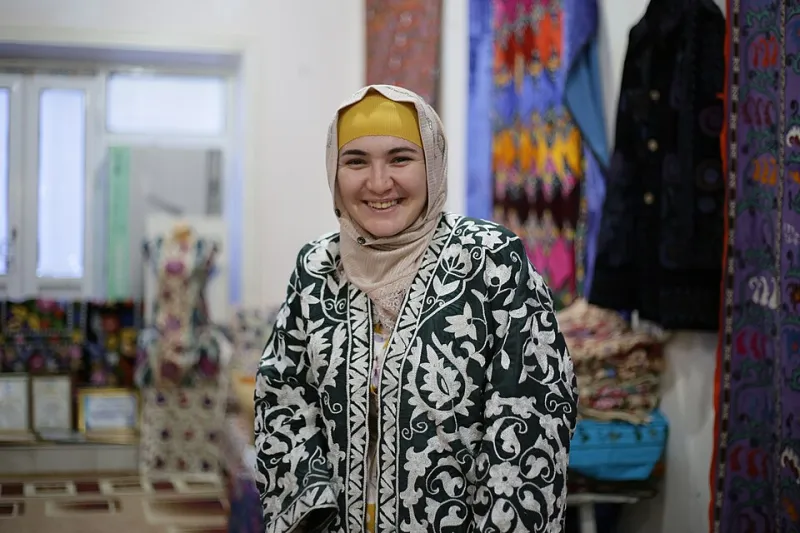
Photo: AIDEPCUL, CC BY 4.0, via Wikimedia Commons
Somewhere between the third unworn blouse stuffed into the back of a closet and the fourth "haul" video watched on a Tuesday night, a lot of Americans started asking the same quiet question: Why does none of this feel like enough?
It's a question that Buddhist philosophy has been sitting with for centuries. The Pali word tanha — often translated as craving or thirst — describes the restless hunger that keeps us reaching for the next thing, the newer thing, the shinier thing. Fast fashion, with its relentless seasonal drops and algorithmically engineered desire, is practically a masterclass in manufacturing tanha. And more people are waking up to that.
The slow fashion movement isn't just an aesthetic preference or a sustainability trend. For a growing community of Americans, it's a genuine spiritual practice — a way of bringing intention, care, and meaning back into the most intimate material layer of daily life: what we put on our bodies.
The Real Cost of "Cheap"
Let's be honest about what fast fashion actually costs. The environmental math is staggering — the apparel industry accounts for roughly 10% of global carbon emissions, and the US alone sends about 11 million tons of textile waste to landfills every year. Those $8 polyester tops from overseas megafactories don't just disappear when we're done with them.
But there's another cost that's harder to put a number on. When we consume mindlessly — buying things we don't need, made by people we'll never know, under conditions we'd rather not think about — we sever something. We disconnect from the chain of human labor and creativity that brought an object into existence. We treat making as invisible.
That severance has a spiritual weight to it. Many wisdom traditions, from Buddhist ethics to Indigenous American craft philosophies to Quaker simplicity, hold that how we acquire things matters just as much as what we acquire. The act of purchase is not neutral — it's a choice that ripples outward.
Artisans as Dharma Teachers
Meet people like Suki Ramirez, a textile artist based in Santa Fe, New Mexico, who hand-dyes her linen pieces using foraged plants and natural indigo. She sells through small platforms and at local markets, and every piece she makes carries what she calls "the memory of the hands that touched it."
"I think people are hungry for that," she told us. "They don't just want a shirt. They want to know the story. They want to feel like what they're wearing has a soul."
Or consider James Okafor, a Brooklyn-based designer who blends West African weaving traditions with contemporary silhouettes. His pieces take weeks to produce, cost accordingly, and sell out within hours of each drop — not because of influencer marketing, but because of word-of-mouth within a community that genuinely values what he's doing.
"My customers aren't just buying clothes," James says. "They're buying into a relationship with craft, with heritage, with the idea that something made with care deserves to be kept."
These makers aren't just selling products. They're modeling a different relationship with material culture entirely.
Building a Wardrobe That Reflects Who You Actually Are
So how do you start? The good news is that slow fashion isn't about spending more money — it's about spending more attention. Here are some grounding practices to help shift your approach:
Start with a closet audit, not a shopping list. Before buying anything new, spend time with what you already own. What do you actually wear? What brings you genuine pleasure to put on? What's just taking up space and psychic energy?
Ask the provenance question. When you do shop, get curious. Where was this made? By whom? Under what conditions? Brands and makers who are proud of their process will tell you. Those who aren't will stay vague.
Embrace the one-in, one-out principle. For every new piece that enters your wardrobe, let one go — ideally to someone who'll use it. This keeps your collection intentional rather than accumulative.
Shop secondhand first. Thrift stores, vintage shops, and peer-to-peer platforms are full of well-made pieces that just need a new home. Giving existing garments a second life is one of the most impactful things you can do.
Invest in makers, not brands. There's a meaningful difference between buying from a corporation with a "sustainable" line and buying directly from an independent artisan. The latter puts money in the hands of real people doing real creative work — and often gets you something genuinely unique.
The Spiritual Practice of Enough
One of the most radical things about the slow fashion philosophy is its quiet insistence on enough. Not deprivation — just sufficiency. The idea that a smaller, more intentional wardrobe can actually feel more abundant than a closet packed with things you don't love.
This resonates deeply with the concept of santosha in yogic philosophy — contentment, or the practice of finding satisfaction in what is rather than endlessly chasing what could be. A wardrobe built on santosha isn't boring. It's actually deeply personal, because every piece in it was chosen with care.
At Dharmatala Market, we've always believed that what you surround yourself with — including what you wear — is a form of spiritual expression. The makers we platform are people who bring intention to their craft, who understand that objects carry energy, and who are building something more meaningful than a product line.
Your wardrobe is a story you tell about yourself every single day. Slow fashion invites you to make it a story worth telling.