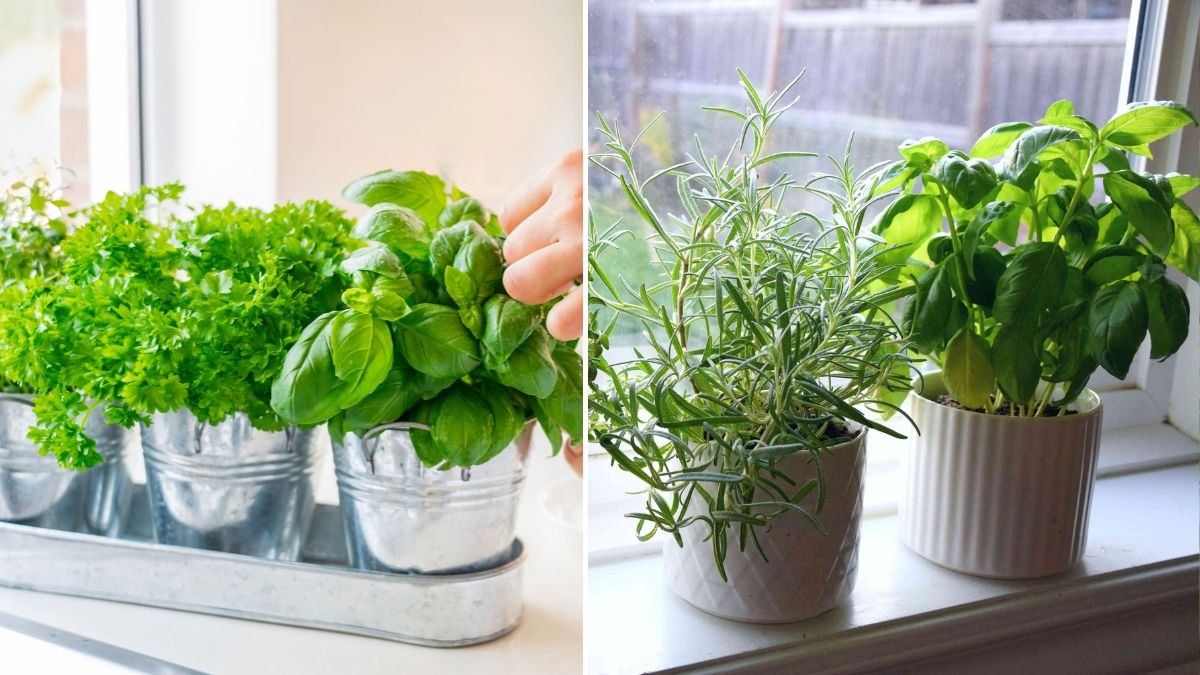

🌱 Background: Why Indoor Herb Gardens Are Trending
Indoor herb gardens have become increasingly popular as people embrace sustainable living, fresh cooking, and year-round gardening. Even if you don’t have a yard, you can enjoy homegrown herbs like basil, thyme, parsley, mint, and rosemary. Indoor gardening allows fresh flavors for cooking, garnishes, teas, and even wellness remedies, all within arm’s reach.
Experts highlight that with the right setup, consistent care, and attention to environmental conditions, herbs can thrive indoors just as well as outdoors, providing a reliable source of greenery and fresh produce year-round. (aol.com)
🪴 1. Choosing the Right Location and Light
Light is the most critical factor for indoor herb success. Most herbs need 6–8 hours of bright light per day. A south-facing window is ideal, while east- or west-facing windows also work for slightly less sun-tolerant herbs. North-facing windows usually do not provide enough light for year-round growth. (almanac.com)
For homes with insufficient natural light, especially in winter, LED grow lights or cool fluorescent lights can replace sunlight. Experts suggest placing lights 12 inches above the plants and running them for 12–16 hours a day to ensure proper growth. Rotating pots regularly prevents uneven growth and leggy stems. (aol.com)
💦 2. Watering and Soil Quality
Watering correctly is essential. Herbs prefer moist but well-drained soil. Overwatering leads to root rot, while underwatering causes leaves to wilt and slow growth.
Watering tips:
- Check the top inch of soil; water when it feels dry.
- Water thoroughly until it drains from the bottom, then discard excess water from saucers.
- Avoid wetting leaves to prevent fungal issues. (aol.com)
Herbs need a well-draining potting mix, often containing peat moss, perlite, or vermiculite. Avoid garden soil as it retains too much water indoors. (bungalow.com)
🌡️ 3. Temperature and Humidity
Indoor herbs thrive in temperatures between 65–75°F (18–24°C). Avoid placing plants near drafts, radiators, or heat vents, which can stress them.
Humidity tips:
- Use a pebble tray with water under pots.
- Group plants to create localized humidity.
- Lightly mist leaves occasionally. (aol.com)
Good air circulation is also crucial. A small fan on low can help prevent stagnant air and reduce the risk of mold or pests. (aol.com)
🪴 4. Choosing Containers
While herb gardens look charming in mixed containers, planting herbs separately is better since different herbs have different watering and light needs.
Container tips:
- Ensure pots have drainage holes to prevent root rot.
- Clay or terracotta containers help regulate moisture; plastic pots work if well-drained.
- Use saucers to catch excess water. (aol.com)
🌿 5. Fertilization and Soil Nutrition
Because indoor herbs grow in limited soil, nutrients deplete quickly. Feeding helps maintain lush growth and flavor.
Fertilization tips:
- Use a balanced water-soluble fertilizer every 4–6 weeks during growing months.
- Avoid over-fertilizing; excessive nitrogen can make herbs grow leafy but lose flavor.
- Organic options like fish emulsion or compost tea enrich soil naturally. (aol.com)
✂️ 6. Pruning and Harvesting
Regular pruning encourages bushy, productive growth and prevents flowering, which can make leaves bitter.
Pruning tips:
- Harvest leaves when oils are concentrated, typically after dew evaporates.
- Avoid removing more than one-third of the plant at once.
- Pinch off flower buds to promote leafy growth. (insidegardenlife.com)
Pruning also improves airflow, reducing fungal disease risk.
🐛 7. Pest Control
Indoor herbs can still attract pests like aphids, spider mites, and whiteflies. Checking plants weekly allows for early treatment.
Pest management:
- Wash leaves gently with water or mild soap.
- Use neem oil or insecticidal soap if infestations persist, safe for edible plants when used as directed.
- Quarantine new plants before adding them to your indoor garden. (amazingfoodanddrink.com)
🌱 8. Herbs That Thrive Indoors
Some herbs are better suited for indoor life:
- Basil – loves warmth and light.
- Parsley – hardy, tolerates medium light.
- Mint – fast-growing and tolerant of varying conditions.
- Oregano & Thyme – Mediterranean herbs that enjoy bright light. (almanac.com)
Use vertical planters or wall-mounted setups if space is limited. (gardeniva.com)
📚 Suggested Authoritative Sources
- AOL – Experts Reveal How to Start an Indoor Herb Garden: Tips on light, containers, watering, and soil. (aol.com)
- The Old Farmer’s Almanac – Growing Herbs Indoors: Seasonal tips and light recommendations. (almanac.com)
- Bungalow – How to Grow Herbs Indoors All Year: Airflow, pest control, and pruning advice. (bungalow.com)
- Inside Garden Life – Indoor Herb Garden Care: Detailed pruning and maintenance guidance. (insidegardenlife.com)
🌟 Final Thoughts
Creating a thriving indoor herb garden doesn’t require a green thumb — it requires attention to light, water, soil, and regular care. With the guidance of experts, you can enjoy fresh herbs year-round for cooking, teas, and wellness. By choosing suitable herbs, giving them adequate light, maintaining proper soil nutrition, managing pests, and pruning regularly, your indoor herb garden can flourish 365 days a year, transforming your home into a green, fragrant oasis. 🌿