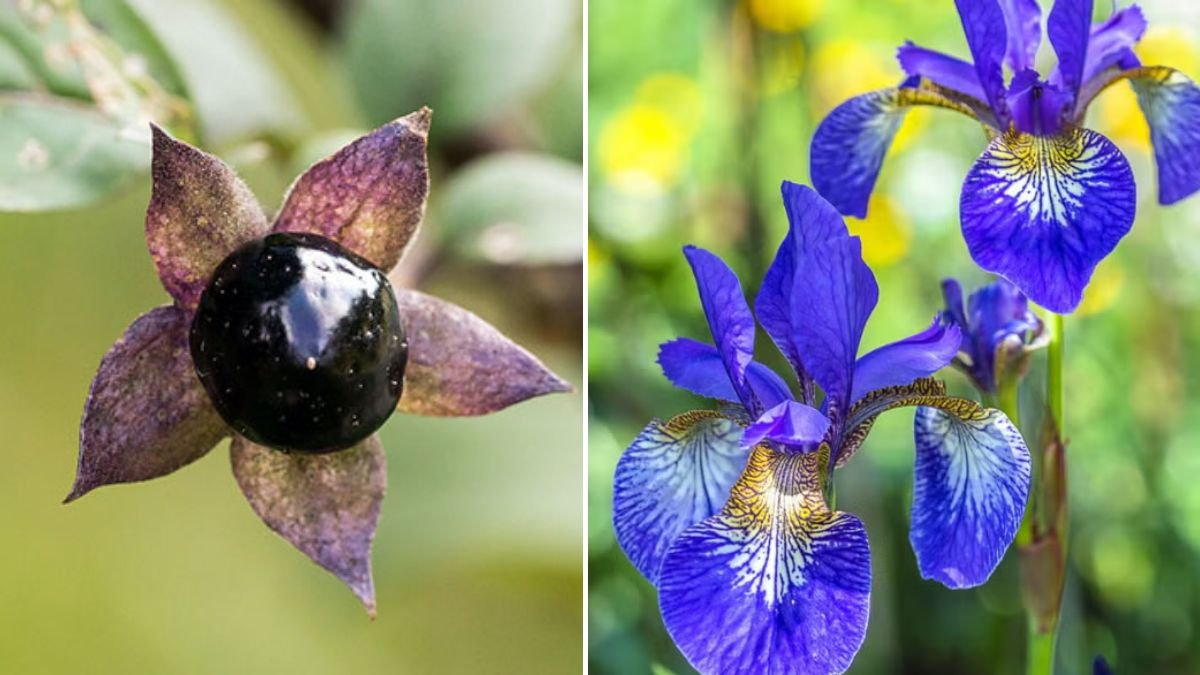

1) Deadly Nightshade (Atropa belladonna)
Deadly nightshade—also known as belladonna—is one of the most infamous poisonous plants in history. Its glossy black berries and purple-green flowers look deceptively inviting, but they contain powerful alkaloids such as atropine, scopolamine, and hyoscyamine.
These chemicals interfere with the nervous system, causing dilated pupils, confusion, hallucinations, rapid heartbeat, and, in severe cases, paralysis and respiratory failure. Just a handful of berries can be fatal, especially to children. Historically, belladonna was used in poisons and cosmetics, but today it stands as a warning that beauty can be deadly.
2) Castor Bean Plant (Ricinus communis)
The castor bean plant is widely cultivated for ornamental purposes and for producing castor oil—but its seeds contain ricin, one of the most lethal natural toxins known. Ricin works by preventing cells from producing proteins, leading to widespread organ failure.
Crushing or chewing just one or two seeds can be deadly. Symptoms include vomiting, bloody diarrhea, severe dehydration, and collapse of the liver and kidneys. Despite its danger, the castor bean plant is still grown in many gardens, making it one of the most dangerous plants commonly encountered.
3) Water Hemlock (Cicuta species)
Often mistaken for wild carrot or parsnip, water hemlock is considered one of North America’s most poisonous plants. Its roots and stems contain cicutoxin, a neurotoxin that attacks the central nervous system.
Within minutes of ingestion, victims may experience violent seizures, severe abdominal pain, and respiratory failure. Many deaths have occurred after people mistakenly consumed the plant thinking it was edible. Unlike some toxins that act slowly, water hemlock can kill quickly, making it especially dangerous.
4) Monkshood or Aconite (Aconitum napellus)
Monkshood—also called wolfsbane—has striking blue or purple flowers and a long history in folklore and poisonings. The plant contains aconitine, which disrupts nerve and heart function.
What makes monkshood especially dangerous is that its toxin can be absorbed through the skin. Touching the plant without gloves may cause numbness, tingling, and heart irregularities. Ingesting it can lead to fatal cardiac arrest. Despite its beauty, monkshood is one of the most toxic plants grown in ornamental gardens.
5) Manchineel Tree (Hippomane mancinella)
Often described as the most dangerous tree in the world, the manchineel grows in coastal regions of the Caribbean, Central America, and South America. Every part of this tree is toxic.
Its small green fruit looks like an apple but contains deadly poisons. The sap can burn the skin and cause blindness, and even standing under the tree during rain can be harmful because toxins drip from its leaves. Burning manchineel wood releases toxic smoke that can damage eyes and lungs. It is a plant that must never be touched or consumed.
6) Rosary Pea (Abrus precatorius)
The rosary pea is a climbing plant that produces red seeds with black tips, often used in jewelry and prayer beads. Inside these attractive seeds is abrin, a toxin even more potent than ricin.
If a seed is cracked or chewed, abrin can cause nausea, internal bleeding, organ failure, and death. A single damaged seed can be lethal. The danger lies in how innocent the seeds look, making them especially hazardous around children.
7) White Snakeroot (Ageratina altissima)
White snakeroot is infamous for causing “milk sickness,” a deadly condition that once plagued early American settlers. The plant contains tremetol, a toxin that is harmless to grazing animals but passes into their milk.
When humans consume contaminated milk or meat, they may suffer vomiting, weakness, tremors, and ultimately death. This plant is a powerful reminder that toxins can move through the food chain in unexpected ways.
8) Oleander (Nerium oleander)
Oleander is a popular ornamental shrub found in gardens, parks, and along highways around the world. Its colorful flowers hide a lethal secret: all parts of the plant contain cardiac glycosides that disrupt the heart’s rhythm.
Even small amounts can cause nausea, vomiting, seizures, irregular heartbeat, and cardiac arrest. People have been poisoned by inhaling smoke from burning oleander wood or drinking water in which oleander leaves were soaked.
9) Suicide Tree (Cerbera odollam)
Native to South Asia and parts of Southeast Asia, the suicide tree produces fruits containing cerberin, a toxin that interferes with the electrical activity of the heart. Ingesting the seed can cause fatal heart arrhythmias.
The plant has been used historically for suicide and murder, and many poisonings go undetected because cerberin is difficult to identify in standard toxicology tests. It is a chilling example of how plants can become tools of tragedy.
10) English Yew (Taxus baccata)
The English yew is a familiar evergreen in gardens, hedges, and cemeteries across Europe and beyond. While its red berries look harmless, nearly every part of the plant contains taxine alkaloids that affect the heart.
Chewing the leaves or seeds can lead to dizziness, seizures, and sudden cardiac arrest. The toxicity is so high that even small amounts can be fatal. Ironically, compounds from yew trees have also been used in cancer treatment—showing how thin the line can be between poison and medicine.
Why These Plants Are So Dangerous
Plants can’t run from predators, so they evolved chemical defenses to protect themselves. These toxins attack vital systems—such as nerves, hearts, and digestive organs—to discourage animals from eating them. Humans, however, are not immune to these natural weapons.
What makes these plants particularly deadly is how easy they are to encounter. Some grow in home gardens, some along hiking trails, and others in wild landscapes that look peaceful but hide lethal risks.
How to Stay Safe Around Toxic Plants
Awareness is the best defense. Here are some essential safety tips:
- Never eat or taste wild plants unless you are absolutely certain they are safe.
- Teach children not to touch or eat unknown berries, seeds, or leaves.
- Wear gloves when gardening or handling unfamiliar plants.
- Keep pets away from toxic ornamental plants.
- Seek medical help immediately if you suspect plant poisoning.
Final Thoughts
Nature is filled with wonders, but it also contains powerful dangers. The ten plants listed here show just how deadly beauty can be. By learning to recognize these species and respecting their toxic power, we protect ourselves, our families, and our pets from unnecessary risk.