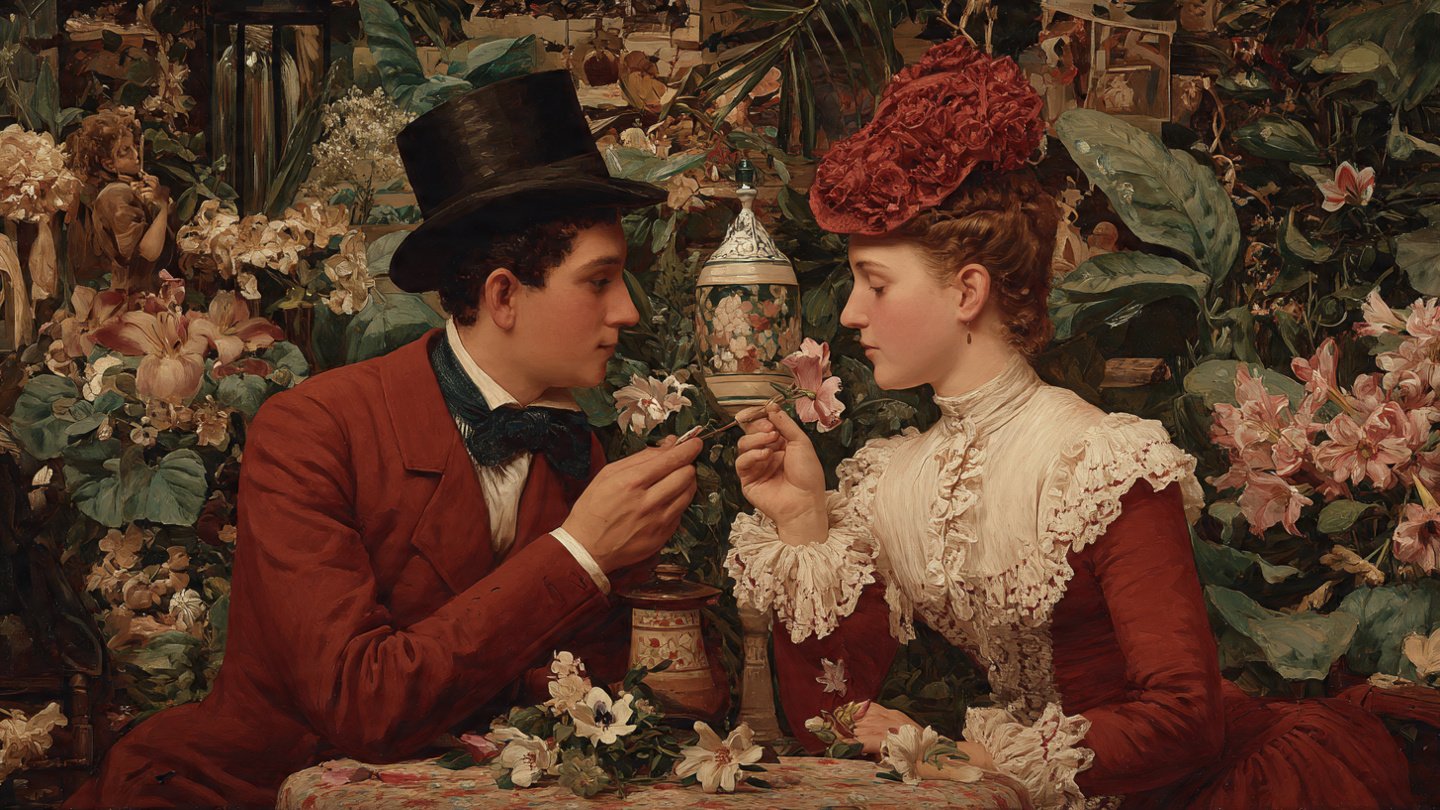

The Victorian Era, spanning from 1837 to 1901, was marked by strict social codes, romantic ideals, and a fascination with the natural world. Among the most intriguing aspects of this time was the elaborate and nuanced way that lovers communicated through flowers—a practice known as floriography. This intricate language allowed individuals to express their emotions, desires, and social standing without ever uttering a word. In this article, we will explore how Victorians used the language of flowers to convey their feelings and the significance of this floral communication.
The Birth of Floriography
Floriography gained prominence in the Victorian Era, partly due to the romantic nature of literature, poetry, and art of the time. The fascination with plants and flowers was fueled by scientific explorations and discoveries, which opened up new realms of botanical knowledge. Additionally, the growing middle class sought to express their refinement and culture through the use of florals in communication. The publication of numerous flower dictionaries during this period further formalized the meanings attributed to various blooms.
How Flowers Were Used for Communication
Victorian lovers primarily communicated their feelings through carefully selected bouquets, individual flowers, or even single petals. Each flower had its own specific meaning, allowing the sender to express a wide range of sentiments, from love and admiration to rejection or even death. Here are some notable examples:
- Roses: Perhaps the most iconic floral symbol, roses carried various meanings based on their color. A red rose symbolized passionate love, while a yellow rose indicated jealousy.
- Violets: These delicate flowers represented faithfulness and modesty, making them a popular choice for courtship.
- Sunflowers: Sunflowers were used to signify adoration and loyalty, embodying the idea of one lover’s constant gaze toward their beloved.
- Lilies: Often associated with purity and refined beauty, lilies were commonly gifted in romantic relationships.
- White Chrysanthemums: White chrysanthemums symbolized truth and fidelity, often gifted to express enduring love.
The Language of Bouquets
The act of arranging flowers into a bouquet was also laden with meaning. The combination of different flowers could either enhance or complicate the message being sent. Here’s how bouquet arrangements played a role:
- Color Schemes: The colors in a bouquet could alter its meaning. A bouquet of mixed roses could convey complex emotions, while a monochromatic arrangement might express singular feelings.
- Symbolic Combinations: Combining flowers with different meanings could amplify the sentiment or even convey a-polite rejection. For instance, a bouquet of violets and white lilies could indicate a deep affection that is also pure.
- Presentation: The way a bouquet was presented—whether wrapped in a floral paper or tied with a ribbon—also carried significance. The subtlety in presentation could indicate the urgency or depth of feeling behind the gift.
Social Implications of Floral Communication
The language of flowers was not just a means for lovers to communicate; it also reflected social class, taste, and cultural propriety. The selection of flowers often revealed one’s understanding of societal expectations and norms:
- Rarity and Exclusivity: Rare flowers were often seen as luxurious and were a status symbol amongst the affluent. Their use could signify wealth and the ability to procure such blooms.
- Knowledge of Floriography: Knowing the meanings of various flowers was viewed as a sign of sophistication. A well-versed suitor could easily impress their beloved by using the right floral messages.
- Gender Norms: Typically, it was men who gifted flowers to women, adhering to the societal rules of courtship. This act allowed them to convey their romantic intentions without direct confrontation.
Literary Influence
The secret language of flowers found a prominent place in Victorian literature. Authors and poets often infused works with floral symbolism to enhance emotions. Notable writers like John Keats and Alfred Lord Tennyson used flowers to articulate themes of love, loss, and longing. These literary mentions further entrenched floriography into the cultural consciousness of the era.
The Decline of Floriography
As the 20th century approached, the intimate communication styles of the Victorian Era began to wane. The rise of modernity shifted the ways in which people expressed emotions. The industrial revolution and changing social norms rendered the secret language of flowers less relevant. However, the fascination and charm of Victorian floriography continue in literature and romantic gestures today.
Conclusion
The Victorian practice of using flowers as a medium for love and communication serves as a poignant reminder of the era’s romantic ideals and stringent social codes. The language of flowers allowed individuals to navigate complex societal expectations while expressing genuine emotions. This intricate floral lexicon not only enriched romantic relationships but also reflected the culture and values of the time. Though its prominence has diminished, the charm of floriography remains a fascinating aspect of romantic history, inspiring modern communication forms and continuing to evoke sentiments of love and longing.
FAQs
What is floriography?
Floriography refers to the practice of using flowers and their arrangements to convey specific messages and emotions. This language was particularly popular during the Victorian Era.
How did individuals learn the meanings of flowers?
Many people educated themselves through flower dictionaries or guides published in the 19th century, which detailed the meanings associated with various blooms.
Were there any limitations to floral communication?
Yes, floral communication was highly contextual; the meaning of a flower could change based on its arrangement, combinations with other blooms, and societal expectations.
Did flowers have the same meanings in all cultures?
No, while there were commonly accepted meanings in Victorian England, different cultures have their own interpretations and significance associated with specific flowers.
How can we incorporate floriography in modern communication?
Today, individuals can bring back floriography by gifting flowers that hold specific meanings, making the act of giving more personal and thoughtful.