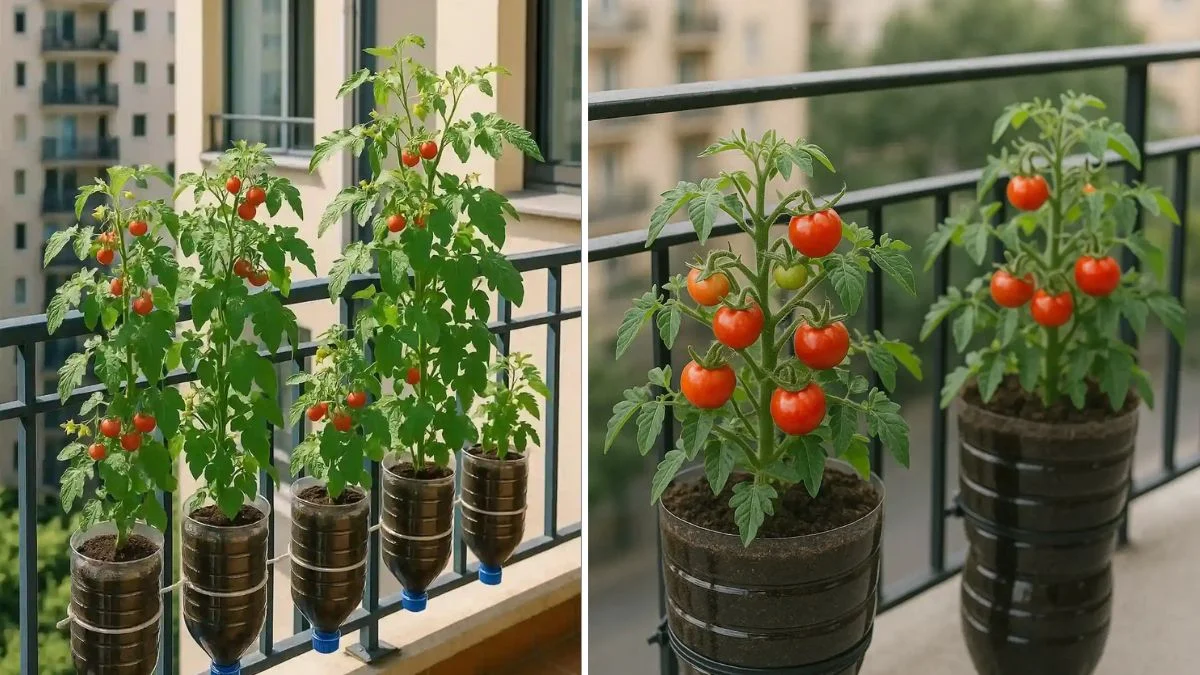

Growing tomatoes does not require a large garden or expensive pots. Plastic bottles offer a simple and effective solution for fast tomato growth, especially in small spaces. This method is ideal for balconies, windows, rooftops, and small patios. Bottles warm up quickly, helping roots grow faster. They also allow better control over soil and watering. Recycling bottles reduces waste and gardening costs. Tomatoes adapt well to confined root spaces when nutrients are managed properly. With the right technique, this method produces healthy plants and early harvests. Even beginners can achieve excellent results using plastic bottles.
Benefits of Growing Tomatoes in Plastic Bottles
Plastic bottles are lightweight and easy to handle. They are readily available in most households. Bottles allow excellent drainage when prepared correctly. They warm up faster than traditional pots, speeding plant growth. Vertical placement saves floor space. Soil stays clean and controlled. Pest pressure is lower compared to ground gardening. Bottles are easy to replace if damaged. This method is highly affordable. These advantages make bottle gardening perfect for urban living.
Choosing the Right Tomato Varieties
Not all tomatoes grow well in small containers. Cherry tomatoes and dwarf varieties perform best. Determinate tomatoes are ideal for bottle gardening. These varieties focus on fruit production rather than height. Disease-resistant seeds reduce maintenance. Early-maturing varieties provide quicker harvests. Local climate-adapted seeds grow more reliably. Avoid large indeterminate varieties. Compact growth ensures better nutrient use. Choosing the right variety determines overall success.
Selecting and Preparing Plastic Bottles
Use large plastic bottles, preferably two-liter or larger. Cut the bottle horizontally or vertically as needed. Make drainage holes at the bottom. Clean bottles thoroughly before use. Avoid bottles that stored chemicals. Smooth sharp edges to prevent injury. Transparent bottles can be wrapped to block light. Secure bottles if hanging vertically. Proper preparation prevents root damage. Well-prepared bottles ensure healthy plants.
Best Soil Mix for Bottle Tomatoes
Tomatoes need nutrient-rich, loose soil. Mix garden soil, compost, and cocopeat equally. Add vermicompost for fertility. Bone meal provides calcium for fruit health. Avoid heavy or compact soil. Good drainage is essential. Soil should hold moisture without becoming soggy. Healthy soil promotes strong root systems. This mix supports fast growth. Soil quality directly affects yield and taste.
about:blank
Planting Tomatoes in Plastic Bottles
Plant seedlings slightly deeper than usual. Deeper planting strengthens roots. Water immediately after planting. Avoid planting during extreme heat. Keep bottles in partial shade for a few days. Gradually expose plants to full sun. Ensure seedlings are upright and stable. Proper planting reduces transplant shock. Strong starts lead to faster growth. Good planting technique ensures early flowering.
Sunlight Requirements for Fast Growth
Tomatoes need six to eight hours of sunlight daily. Morning sunlight is ideal. Lack of light slows growth and flowering. Place bottles near sunny windows or balconies. Rotate bottles weekly for even exposure. Avoid shaded walls. Adequate light improves fruit sweetness. Sunlight boosts photosynthesis. Strong light ensures quick harvests. Light is essential for success.
Watering Schedule for Bottle-Grown Tomatoes
Plastic bottles dry faster than pots. Water regularly but avoid waterlogging. Morning watering is best. Ensure excess water drains out. In hot weather, daily watering may be required. Avoid wetting leaves frequently. Mulching reduces moisture loss. Consistent watering prevents cracking. Proper hydration improves fruit size. Balanced watering keeps plants healthy.
Fertilizing for Early and Heavy Harvest
Tomatoes are heavy feeders. Apply liquid compost every two weeks. Banana peel water boosts potassium. Epsom salt provides magnesium. Avoid excessive nitrogen. Too much nitrogen delays fruiting. Balanced nutrition supports flowers and fruits. Organic fertilizers improve soil health. Regular feeding accelerates growth. Nutrition is key to fast results.
Supporting Tomato Plants in Bottles
Tomato plants need support as they grow. Use small sticks or strings. Tie stems gently to avoid damage. Support prevents bending and breakage. Upright plants receive more sunlight. Good airflow reduces disease risk. Bottle gardens benefit from vertical support. Proper staking improves fruit shape. Support ensures plant stability. Strong plants last longer.
about:blank
Pest and Disease Control
Common pests include aphids and whiteflies. Neem oil spray controls them effectively. Remove infected leaves promptly. Good airflow reduces fungal diseases. Avoid overcrowding bottles. Healthy plants resist pests naturally. Organic methods keep produce safe. Regular inspection prevents infestations. Clean gardening practices are essential. Prevention protects your harvest.
Harvesting Tomatoes at the Right Time
Harvest tomatoes when fully colored and firm. Vine-ripened tomatoes taste best. Use scissors to cut fruits. Regular harvesting encourages more flowering. Morning harvest preserves freshness. Avoid leaving overripe fruits on plants. Proper timing improves sweetness. Frequent harvesting increases yield. Fresh tomatoes enhance meals. Timely harvest keeps plants productive.
Table: Tomato Growing in Plastic Bottles
| Aspect | Best Practice |
|---|---|
| Bottle size | Two liters or larger |
| Sunlight | Six to eight hours |
| Soil | Loose and organic |
| Watering | Regular and moderate |
| Support | Stick or string |