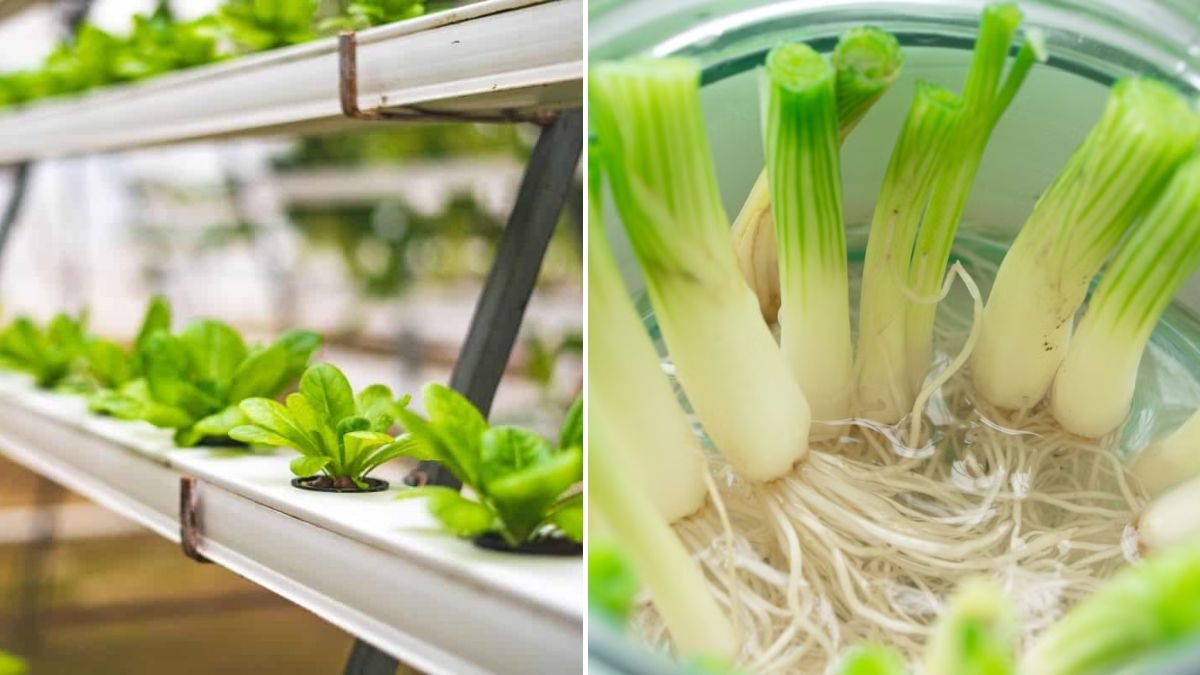

Background: The Rise of Water-Based Indoor Gardening
Traditional vegetable gardening relies on soil as both the source of nutrients and the structure for roots. But modern methods such as hydroponics and soilless cultivation allow plants to grow without soil, relying on water enriched with essential nutrients. In these systems, water not only sustains the plant but also delivers minerals like nitrogen, phosphorus, and potassium directly to the roots, accelerating growth. (nal.usda.gov)
The most beginner-friendly form of water-based indoor growing is the Kratky method, a passive hydroponic technique that uses a reservoir of water and nutrients to sustain plants. The Kratky method doesn’t require pumps or electricity, making it ideal for home use. While water alone can stimulate early germination, adding nutrients is essential for continued growth and full vegetable yields. (en.wikipedia.org)
Recent experiments in soilless indoor farming demonstrate that seedlings can sprout within 48 to 72 hours when placed in a moist environment, highlighting the potential for rapid results with water-based systems. (phys.org)
How Water-Based Indoor Gardening Works
Water-based growing systems mimic the natural processes that allow seeds to germinate and plants to thrive. The key components include:
1. Water Culture
Plant roots absorb water directly. In hydroponic setups, they are either suspended in water or supported by an inert medium. The water provides hydration and, if supplemented with nutrients, essential minerals for growth. (nal.usda.gov)
2. Controlled Environment
Indoor growing allows gardeners to regulate temperature, humidity, and light, creating an ideal microclimate that accelerates germination and early development. LED grow lights can mimic sunlight, ensuring seedlings receive sufficient energy. (nbcnews.com)
3. Passive Systems
Methods like the Kratky system allow water levels to gradually decrease, creating a small air gap that provides oxygen to roots. This setup supports healthy root development without pumps or complex equipment. (en.wikipedia.org)
Step-by-Step Guide: Growing Vegetables Indoors With Water
You can try this technique at home using simple materials. Here’s a beginner-friendly approach:
Step 1: Choose Suitable Vegetables
Leafy greens like lettuce, spinach, kale, and herbs are ideal for water-based growing. They sprout quickly and thrive in hydroponic setups.
Step 2: Prepare a Water Reservoir
Use a clean jar, container, or bottle filled with water. For initial germination, seeds can be placed on a moist paper towel, floating platform, or in a small container partially submerged in water.
Step 3: Monitor Temperature and Humidity
Keep the setup in a warm, stable location. Ideal conditions promote rapid germination and prevent mold growth. Temperature control is crucial for seedlings to sprout quickly.
Step 4: Provide Light
Plants require light for photosynthesis. Place them near a sunny window or use full-spectrum LED grow lights for at least 12–16 hours per day. (nbcnews.com)
Step 5: Transition to Nutrient Water
Once seedlings develop roots, introduce a hydroponic nutrient solution. This ensures the plants receive essential minerals for continued growth. Although water alone can initiate sprouting, nutrients are required for full leaf development and fruiting.
Step 6: Harvest or Transplant
Depending on the vegetable, you can either continue growing indoors in water-based systems or transplant seedlings to soil or hydroponic setups for full maturity.
Best Vegetables for Rapid Water-Based Indoor Growth
Not all plants are suitable for water-only germination and indoor growth. The following are highly recommended:
- Lettuce – Germinates quickly and grows well in water.
- Spinach – Thrives in controlled indoor environments.
- Basil – Fast-growing, ideal for small indoor gardens.
- Kale – Robust and nutrient-rich leafy green.
- Radish (microgreens) – Fastest to sprout and harvest. (agrifarming.in)
Tips for Beginners Using Water-Based Methods
1. Keep Containers Clean
Prevent algae and bacteria by cleaning containers regularly. Use filtered water if possible.
2. Ensure Oxygen Supply
Roots need oxygen. Passive Kratky setups or air gaps in water reservoirs help provide this naturally.
3. Control Light Exposure
Seedlings require adequate light. Too little light slows growth; too much can stress young plants.
4. Track Growth
Keep a journal to monitor which vegetables thrive, water levels, and growth speed. This improves outcomes over successive planting cycles.
5. Start Small
Experiment with a few seeds or containers before scaling up. Small-scale success builds confidence and understanding of the system.
Advantages of Water-Based Indoor Vegetable Gardening
1. Minimal Space Requirement
Grow fresh vegetables in apartments, balconies, or small indoor areas without soil.
2. Faster Growth
Controlled conditions and direct water absorption can accelerate early growth compared to traditional soil gardening.
3. Sustainable
Reduces the need for large plots of land and excessive water. Hydroponic systems often use up to 90% less water than conventional soil-based gardens. (verticalfarmdaily.com)
4. Reduced Pests and Soil-Borne Diseases
Water-based systems eliminate most soil-borne pathogens and pests, decreasing the need for chemical pesticides.
Challenges and Considerations
- Water-only setups without nutrients are suitable only for early germination.
- Plants eventually require minerals for sustained growth.
- Adequate light and oxygen supply are critical for healthy development.
- Beginners should monitor water quality and cleanliness to prevent mold or root rot.
Authoritative Sources for Further Learning
- USDA Hydroponics Overview – Introduction to hydroponic systems and plant nutrition. (nal.usda.gov)
- Kratky Method (Wikipedia) – Step-by-step guide for passive hydroponics. (en.wikipedia.org)
- Penn State Extension Hydroponics Guide – Expert advice for small-scale and home hydroponic gardening. (psu.edu)
- Research on Water-Based Growing Media – Academic study on using water and alternative mediums for rapid seed germination. (phys.org)
- Vertical Farm Daily – Insights into modern urban and indoor farming trends. (verticalfarmdaily.com)
Final Thoughts
The idea of growing vegetables indoors with nothing but water is no longer a futuristic concept. Controlled water-based germination and hydroponics allow anyone — even beginners — to start seeds indoors and observe rapid sprouting within 72 hours. While sustained growth eventually requires nutrients, this method is perfect for urban dwellers, small-space gardeners, and anyone seeking a low-effort way to grow fresh vegetables.