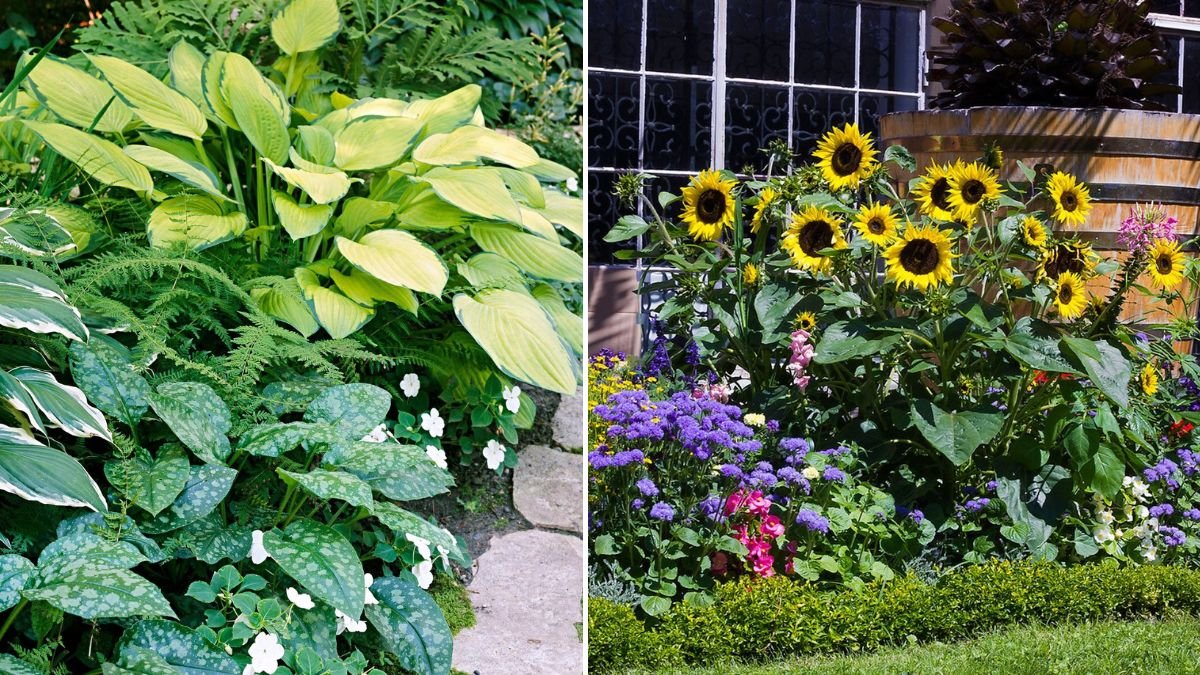

1. Hosta (Hosta spp.)
Hostas are among the most iconic shade plants. They are prized for their lush foliage, which ranges from deep blue-green to chartreuse and variegated patterns. Hostas thrive in partial to full shade and prefer moist, well-drained soil. They make excellent choices for borders, under trees, or in mass plantings where flowers may not bloom reliably.
Highlights:
- Textured foliage adds interest in shady areas
- Low-maintenance perennial
- Works well in container gardens
Hostas are versatile, with varieties suited for small spaces or large borders. They can also complement flowering shade plants, providing a leafy backdrop that enhances colorful blooms.
2. Astilbe (Astilbe spp.)
Astilbes are celebrated for their feathery plumes of flowers in shades of pink, red, white, and purple. They thrive in partial to full shade and prefer moist, rich soils. These perennials brighten shady areas in early to mid-summer and provide height and vertical interest in woodland gardens.
Highlights:
- Long bloom period adds color to shady spots
- Ideal for moist shade or along streams
- Works well in mixed borders
Astilbes are perfect for gardeners seeking both color and texture, especially in areas where sunlight is limited. Their plume-like flowers can be paired with ferns or hostas for a layered garden effect.
3. Coral Bells (Heuchera spp.)
Coral bells offer vibrant foliage in shades ranging from deep purple to lime green, silver, and variegated patterns. Their small, bell-shaped flowers bloom in late spring to summer, adding extra charm to shade gardens. Coral bells are adaptable to partial to full shade and work well in containers, borders, or shaded edges.
Highlights:
- Year-round foliage color
- Compact growth suitable for small spaces
- Ideal for containers and mixed beds
These plants provide visual interest even when not in bloom, making them a versatile addition to shady garden areas.
4. Foamflower (Tiarella spp.)
Foamflower is a woodland perennial with delicate, frothy blooms and attractive foliage that thrives in deep shade. Its subtle white or pink flowers bloom in spring, creating a soft, airy appearance in garden beds. Foamflower is also a great groundcover for shady spots and pairs well with ferns and hostas.
Highlights:
- Elegant spring blooms
- Patterned leaves add texture
- Thrives in moist, shaded areas
Foamflower is particularly effective in naturalistic plantings, providing beauty without demanding excessive sunlight.
5. Bleeding Heart (Dicentra spectabilis)
Bleeding heart is known for its graceful arching stems of heart-shaped flowers, typically in shades of pink or white. It prefers cool shade and rich, moist soil, blooming in spring and early summer before fading to foliage. This perennial adds a romantic and whimsical touch to any shade garden.
Highlights:
- Unique heart-shaped flowers
- Ideal for woodland or shaded borders
- Requires minimal maintenance
Bleeding heart combines well with other spring bloomers, adding dramatic flower shapes and complementing lush foliage plants like hosta and ferns.
6. Lungwort (Pulmonaria spp.)
Lungwort is valued for early spring blooms and spotted or silver-marked foliage. It tolerates deep shade and moist, well-drained soils, making it a standout in shady corners. Flowers often appear in blue, pink, or purple, attracting pollinators early in the season.
Highlights:
- Eye-catching spotted foliage
- Early bloom for spring interest
- Ideal for shaded beds and woodland gardens
Lungwort pairs beautifully with hostas and ferns, creating a layered texture and seasonal color contrast in low-light areas.
7. Primrose (Primula spp.)
Primroses bring bright, cheerful flowers to shady gardens, thriving in partial to full shade and cool, moist soils. These perennials bloom in a wide range of colors, providing uplifting spring color in areas where other plants struggle.
Highlights:
- Rainbow-hued flowers brighten shady spots
- Works in containers, borders, or rock gardens
- Early-season bloomers
Primroses are versatile and excellent for gardeners who want continuous color in shaded areas throughout the spring months.
8. Begonia (Begonia spp.)
Begonias are known for their vibrant blooms and ornamental foliage, thriving in shade where many other flowering plants fail. They perform well in containers, window boxes, or shaded beds, providing color through summer into fall.
Highlights:
- Long-lasting flowers in pink, red, and white
- Compact growth ideal for containers
- Can brighten patios and shaded entryways
Begonias offer an eye-catching alternative for areas with limited sunlight, adding both flowers and decorative leaves to the landscape.
9. Oxalis (Oxalis spp.)
Oxalis is a compact ornamental plant with delicate star-shaped flowers and soft, attractive foliage. It thrives in shade and is perfect for containers, garden accents, or rock gardens. Its subtle elegance makes it a popular choice for shaded borders.
Highlights:
- Graceful flowers in pink, white, or yellow
- Works well in small spaces and containers
- Low maintenance
Oxalis adds light and color to areas that might otherwise appear dark or uninviting.
10. Ferns (Various spp.)
Ferns, including Japanese painted fern, maidenhair fern, and autumn fern, are classic shade garden plants. Their feathery foliage brings a woodland feel to shady areas. Most ferns require deep shade with moist, well-drained soil and are excellent for underplanting beneath shrubs and trees.
Highlights:
- Adds texture and movement to shade gardens
- Low-maintenance once established
- Works in mass plantings or as fillers
Ferns are ideal for creating a natural, serene environment and pair well with flowering shade perennials for year-round interest.
Tips for Designing with Shade-Tolerant Ornamentals
Understand Your Shade Levels
Not all shade is equal. Dappled shade from trees may support more flowering plants than deep or full shade, which receives less than three hours of sunlight per day.
Improve Soil & Moisture
Shaded areas often have cooler, damper soil. Amend with compost and mulch to retain moisture and nutrients, supporting healthy plant growth.
Group by Water Needs
Shade areas can vary in moisture depending on proximity to structures or tree roots. Group plants with similar water requirements, such as moisture-loving astilbes and lungworts, to reduce stress.
Layer Foliage & Form
Mix foliage textures — bold hosta leaves, feathery ferns, and delicate flowers — to maintain visual interest even when blooms fade. Layered planting ensures shade gardens remain dynamic throughout the seasons.
Authoritative Sources
For further guidance, consult these expert resources:
- Proven Winners: Top shade garden plants
- Gardeners Supply: Great shade-loving plant ideas
- Homes & Gardens: Best shade plants for structure and color
- Ugaoo: Popular shade-loving flowering plants
Final Thoughts
Shade doesn’t mean dull. With the right shade-tolerant ornamentals, you can turn dark corners, under trees, or north-facing garden areas into vibrant, thriving spaces. From bold hostas and delicate foamflower to colorful primroses and long-blooming begonias, shade gardens can offer color, texture, and seasonal interest year-round.
By understanding light levels, soil moisture, and plant requirements, you can create a garden that flourishes even without full sun. Shade-tolerant ornamentals not only enhance beauty but also contribute to biodiversity, attracting pollinators and supporting healthy garden ecosystems.
Embrace the shade and use these ten plants to transform low-light areas into stunning garden spaces that delight throughout the seasons.