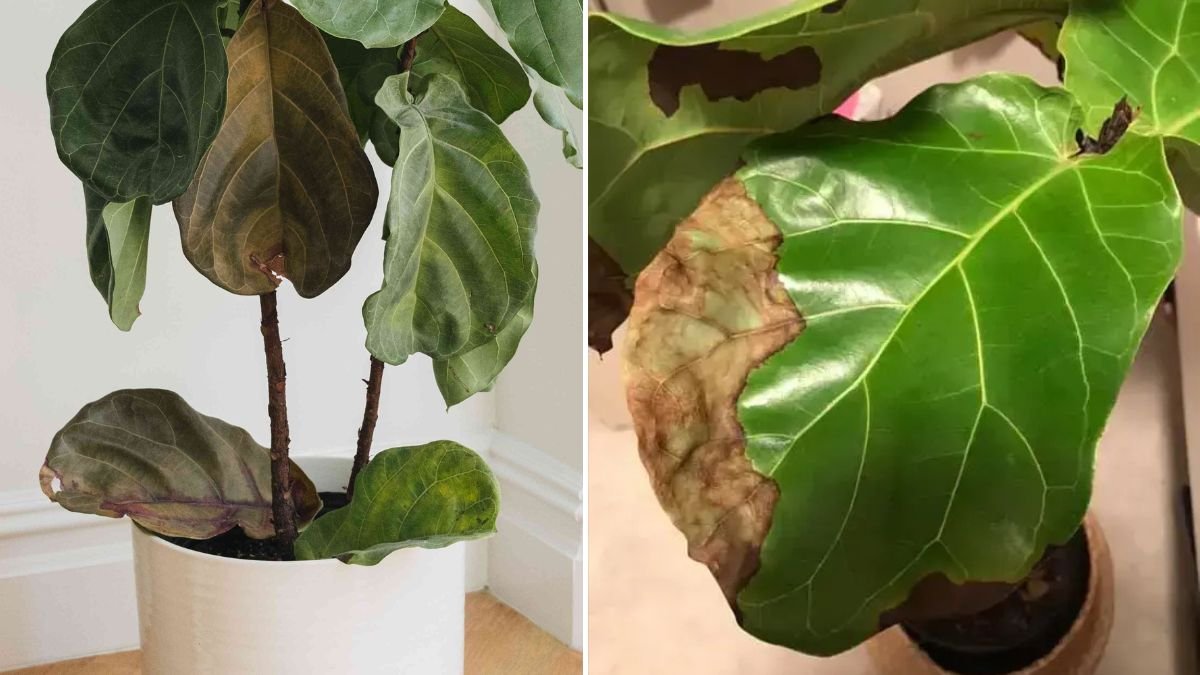

Introduction: Understanding Leaf Drop in Fiddle Leaf Figs
Few houseplants are as dramatic or popular as the fiddle leaf fig (Ficus lyrata). With its bold, violin-shaped leaves and stately height, it’s a centerpiece in modern interior spaces. Yet, it’s equally infamous for being temperamental, especially when it starts dropping leaves.
Leaf drop in fiddle leaf figs is usually a stress response, not an instant death sentence. The plant is signaling that something in its environment is off — whether it’s water, light, temperature, or humidity. Recognizing the cause early is essential for helping your plant recover and thrive.
In this guide, we’ll explore the top reasons fiddle leaf figs shed leaves, how to diagnose the problem, and actionable steps to bring your plant back to health.
💧 1. Improper Watering: Too Much or Too Little
Watering is the number-one cause of leaf drop in fiddle leaf figs. These tropical plants have sensitive roots that require consistent moisture — but not standing water.
⚠️ Overwatering
Overwatering is the most common culprit. When roots are constantly wet, they cannot access oxygen, which leads to root rot. Early signs include yellowing lower leaves that feel soft or mushy before falling off.
How to fix it:
- Allow the top 2–3 inches of soil to dry out between waterings.
- Make sure your pot has adequate drainage and use a well-draining soil mix.
- If root rot is suspected (brown, mushy roots), carefully remove the plant from its pot, trim affected roots, and repot in fresh soil.
🌵 Underwatering
Conversely, underwatering causes the plant to conserve moisture by shedding leaves. Older leaves are usually affected first, turning dry, brittle, or brown at the edges before dropping.
How to fix it:
- Water deeply when the top soil is dry several inches down.
- Consider bottom watering, where you let the plant sit in water briefly to fully hydrate the root system.
☀️ 2. Light Problems: Too Dark or Too Bright
Fiddle leaf figs thrive in bright, indirect light. In their native West African habitat, they grow under open canopy sunlight — bright, filtered light rather than deep shade or harsh direct sun.
📉 Too Little Light
Insufficient light prevents the plant from photosynthesizing properly. This can cause lower leaves to drop as the plant conserves energy. Other signs include elongated, weak stems and slow growth.
Solution:
- Move your plant closer to a bright east- or south-facing window.
- Rotate the plant occasionally so all leaves get light exposure.
☀️ Too Much Direct Sun
Sudden exposure to strong, direct sunlight can scorch leaves, causing brown spots and leaf drop. This often happens if a plant is moved abruptly from low-light conditions to intense light.
Solution:
- Gradually acclimate your plant to brighter areas over several weeks.
- Use sheer curtains to diffuse direct sunlight if necessary.
🌡️ 3. Environmental Stress: Temperature Fluctuations & Drafts
Fiddle leaf figs prefer stable temperatures between 65–80°F (18–27°C). Rapid fluctuations can shock the plant and trigger leaf drop.
- Cold drafts from open windows or AC vents are common stressors.
- Heat from radiators or direct sunlight can also cause leaves to wilt or fall.
How to fix it:
- Keep your plant away from drafts and direct sources of heat or cold.
- Maintain a consistent temperature in the room, especially during seasonal changes.
💨 4. Low Humidity: Dry Indoor Air
Being tropical, fiddle leaf figs thrive in moderate to high humidity. Indoor environments — especially heated rooms in winter — can be far too dry, causing leaf browning and drop.
How to fix it:
- Use a humidifier near the plant.
- Place the pot on a pebble tray with water, allowing evaporation to increase local humidity.
- Group several plants together; collectively, they raise the microclimate humidity.
🪴 5. Stress From Repotting, Moving, or Environmental Changes
Fiddle leaf figs are sensitive to change. Even minor shifts, like moving the plant to a different room, changing furniture placement, or repotting, can trigger leaf drop.
How to fix it:
- Minimize movement once you find a suitable spot.
- If you must move the plant, do so gradually over several days.
- Avoid repotting during periods of stress unless absolutely necessary.
🐛 6. Pests and Root Problems
Common pests like spider mites, mealybugs, and scale insects can weaken your plant and cause leaf drop. Signs include:
- Small spots on leaves
- Sticky residue or webs
- Visible tiny bugs upon inspection
How to fix it:
- Wipe leaves with a damp cloth to remove pests.
- Treat infestations with insecticidal or horticultural soap.
- Quarantine the plant if infestation is severe.
Additionally, root-bound plants may shed leaves because crowded roots cannot absorb enough nutrients or water. Repotting into a slightly larger container with fresh soil often resolves the issue.
🪴 Diagnosing Leaf Drop: Quick Reference
| Symptom | Likely Cause | Solution |
|---|---|---|
| Lower leaves yellow and fall | Overwatering | Reduce watering, check drainage |
| Dry brown edges, brittle leaves | Underwatering or low humidity | Deep water, increase humidity |
| Leaves drop after moving | Environmental stress | Keep plant stable, gradual acclimation |
| Browning due to drafts | Temperature fluctuations | Move away from vents/windows, stable temperature |
| Pest damage | Spider mites, mealybugs, scale | Treat with neem oil/insecticidal soap |
🌿 Prevention Tips
- Water only when the top 2–3 inches of soil are dry.
- Provide bright, indirect light daily.
- Maintain stable temperature and avoid drafts.
- Keep humidity moderate to high with a humidifier or pebble tray.
- Inspect regularly for pests and treat early.
- Repot every 1–2 years to prevent root crowding.
Following these tips can significantly reduce leaf drop and maintain a healthy, thriving plant.
📚 Authoritative Sources
For up-to-date, expert guidance on fiddle leaf fig care:
- Gardening Know How: Is Your Fiddle Leaf Fig Dropping Leaves?
- Southern Living: How To Keep Your Fiddle Leaf Fig Alive & Healthy
- The Spruce: How Much Light Your Fiddle Leaf Fig Needs
- Gardening in Steps: Fiddle Leaf Fig Dropping Leaves: Causes & Fixes
🌱 Conclusion
Leaf drop in fiddle leaf figs is a common but manageable issue. By understanding the plant’s needs for water, light, temperature, humidity, and stability, you can quickly identify the cause and take corrective action.
Most leaf drop cases are reversible, and with proper care, your fiddle leaf fig can recover fully and flourish once again. Paying attention to its signals, maintaining consistency, and addressing stress factors early ensures a healthy, vibrant, and thriving centerpiece plant in your home.
Remember, patience is key: fiddle leaf figs take time to respond, but the effort is worth it for a plant that can live for decades and become a true focal point in your indoor space. 🌿