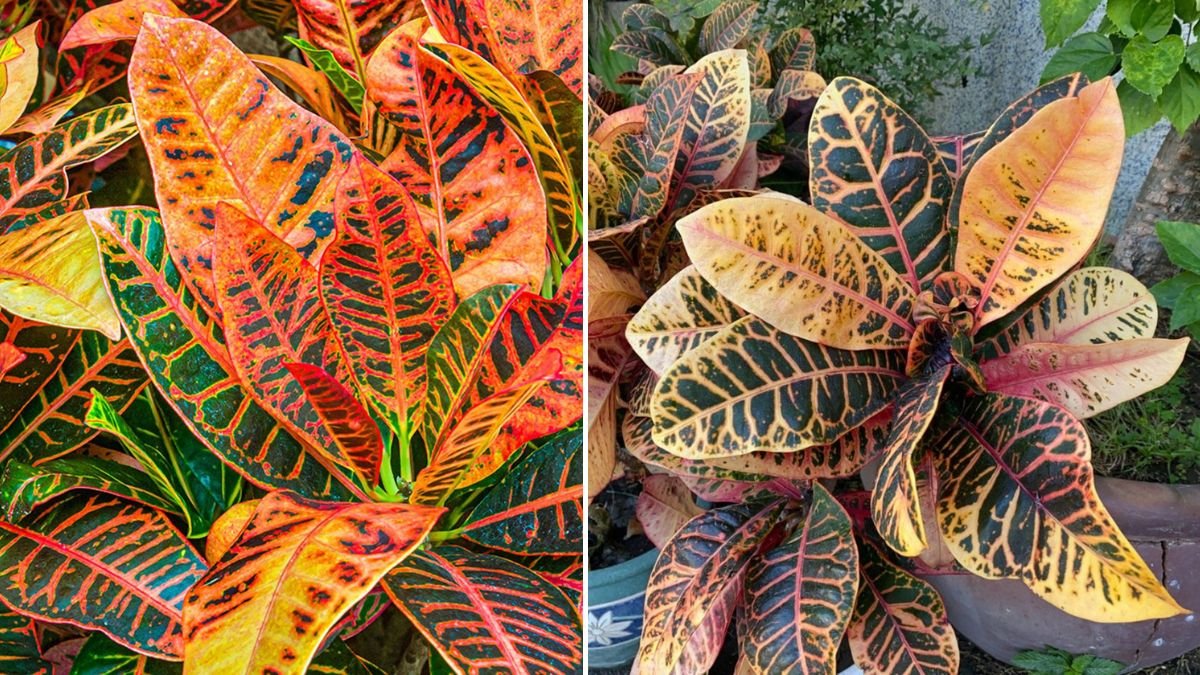

Crotons are some of the most striking houseplants you can grow indoors. Their bold leaves, splashed with shades of red, orange, yellow, green, and even purple, look like living artwork. When a croton is happy, it becomes the star of the room. But when it is stressed, it quickly drops leaves and loses its color.
The secret to keeping crotons healthy and colorful indoors is understanding what they love—and what they hate. These tropical plants are not difficult, but they do have specific needs. With the right care, your croton can stay bright, full, and beautiful all year long.
Let’s explore everything you need to know to help your croton thrive inside your home.
Why Crotons Lose Color Indoors
Crotons naturally grow in warm, sunny, and humid tropical environments. Indoors, conditions are often very different. When crotons do not get enough light, warmth, or humidity, their leaves fade to green and may start to fall off.
Stress from cold drafts, dry air, or inconsistent watering can also cause leaf drop. The good news is that once you correct these problems, crotons usually recover quickly.
Give Crotons Plenty of Bright Light
Light is the most important factor for colorful croton leaves. The brighter the light, the more intense the leaf colors will be.
Place your croton near a bright window where it can get several hours of indirect sunlight each day. A little gentle morning sun is fine, but avoid harsh afternoon sun that can scorch the leaves.
If your croton is sitting in a dark corner, it will slowly turn green. Move it to a brighter location, and within weeks you will see the colors return.
Maintain Warm, Stable Temperatures
Crotons love warmth. They grow best in temperatures between 65°F and 85°F (18°C to 29°C). Cold air is one of the biggest threats to a healthy croton.
Keep your plant away from air conditioners, heaters, fans, and cold windows. Even a short blast of cold air can cause leaf drop.
A stable, warm environment helps crotons keep their leaves and their rich colors.
Water the Right Way
Crotons like evenly moist soil, but they do not like sitting in water. Let the top inch of soil dry slightly before watering again.
When you water, do it thoroughly until water drains out of the bottom of the pot. Then empty the saucer so the roots do not stay wet.
Too much water leads to root rot, while too little causes leaf drop. Finding a consistent watering routine is key to keeping your croton healthy.
Boost Humidity for Lush Leaves
Dry indoor air is another common reason crotons struggle. These plants love humidity.
You can increase humidity by:
- Misting the leaves a few times a week
- Placing a tray of water and pebbles under the pot
- Using a small humidifier
- Grouping plants together
Higher humidity keeps the leaves glossy, flexible, and vibrant.
Use Well-Draining Soil and a Good Pot
Crotons need soil that holds moisture but also drains well. A high-quality indoor potting mix with added perlite or sand works well.
Make sure the pot has drainage holes. Without them, excess water can build up and damage the roots.
Repot your croton every 2 to 3 years or when it outgrows its container.
Feed for Bright Colors
Crotons are heavy feeders during their growing season. Use a balanced liquid houseplant fertilizer every 3 to 4 weeks in spring and summer.
This gives the plant the nutrients it needs to produce strong growth and intense leaf colors.
In fall and winter, reduce feeding, as the plant’s growth slows down.
Prune to Keep It Full
If your croton becomes tall or leggy, you can prune it to encourage bushier growth. Cut just above a leaf node, and new branches will grow.
Pruning also helps remove damaged or faded leaves, allowing the plant to focus its energy on healthy new growth.
Watch for Pests
Indoor crotons can sometimes attract pests like spider mites, mealybugs, and scale. These pests weaken the plant and dull its leaves.
Check the leaves regularly. If you see sticky residue, webbing, or tiny insects, wipe the leaves with soapy water or use neem oil.
Keeping the leaves clean also helps them absorb more light.
Why Leaves Drop Suddenly
If your croton drops leaves after you bring it home or move it, don’t panic. Crotons are sensitive to changes in light, temperature, and humidity.
Give it time to adjust and keep conditions stable. New leaves will grow once the plant settles into its new environment.
A Stunning Plant Worth the Care
Crotons may be a little demanding, but their beauty makes the effort worthwhile. Few houseplants can match their fiery colors and bold patterns.
With bright light, warm temperatures, proper watering, and good humidity, your croton will reward you with a spectacular display that brings life and energy to any room.
Treat your croton well, and it will remain healthy, colorful, and breathtaking for many years to come.