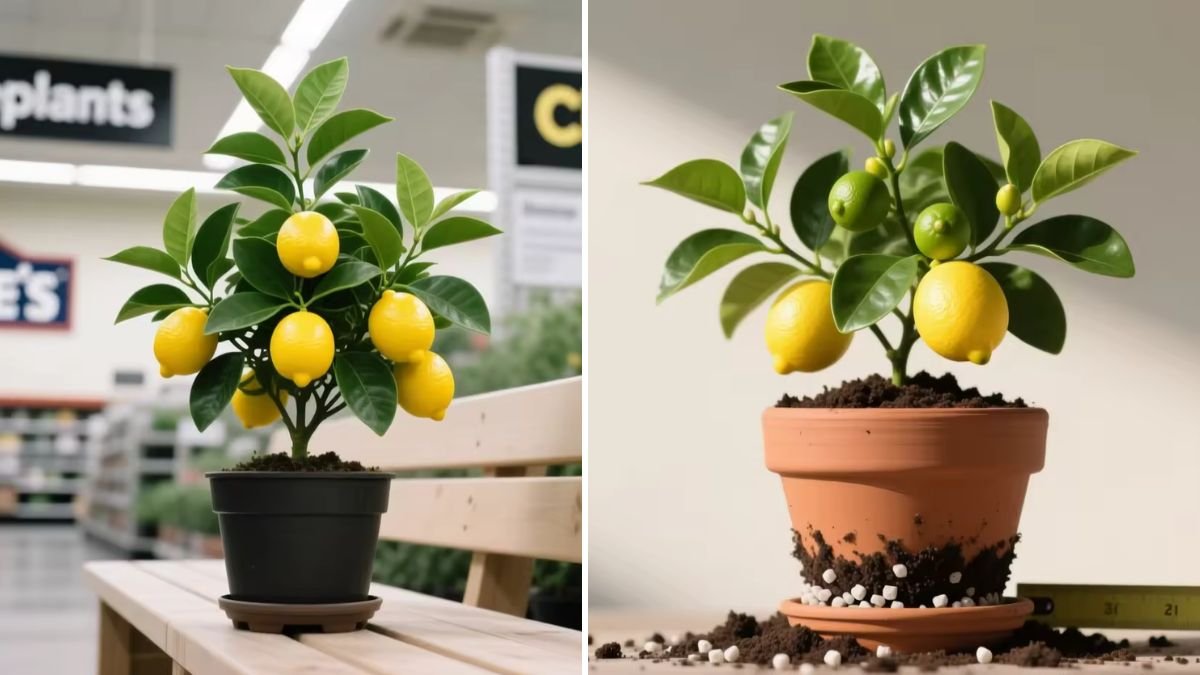

Lowe’s sells affordable lemon plants perfect for beginners, but many assume they require tropical climates to thrive. Truth: Meyer lemon varieties (most common at Lowe’s) adapt to containers and grow well indoors with basic care. For 90% of home gardeners, the real hurdle isn’t temperature—it’s overwatering. Skip costly soil upgrades; standard potting mix succeeds with proper drainage.
Why Lowe’s Lemon Plants Work for Home Gardeners
Lowe’s typically stocks Meyer lemon plants—a dwarf hybrid ideal for containers. Unlike commercial citrus trees, these thrive in pots as small as 5 gallons, making them perfect for patios or sunny windowsills. I’ve grown three Lowe’s lemon plants over seven years across zone 7b winters, and they consistently produce fruit with minimal fuss. The key isn’t exotic gear—it’s consistency in four areas: light, water, soil, and seasonal transitions.
Choosing Your Lemon Plant at Lowe’s: What to Look For
When selecting at Lowe’s, prioritize plants with:
- Vibrant green leaves (no yellowing or spots)
- Sturdy central stem (at least 12″ tall)
- No visible pests (check undersides of leaves)
Avoid bargain-bin plants with wilted foliage—these often indicate root rot from overwatering in-store. Lowe’s restocks seasonally (spring through early summer), so visit mid-week for freshest stock. Remember: cheaper isn’t better here. A $25 plant with healthy roots outperforms a $15 struggling specimen.
Planting Your Lowe’s Lemon: A 4-Step Guide
Follow this foolproof container method I’ve refined through trial and error:
- Pot selection: Use a 5-7 gallon container with drainage holes. Terracotta works best for moisture control.
- Soil mix: Combine 2 parts standard potting mix + 1 part perlite. Skip “citrus-specific” soils—they’re unnecessary.
- Planting depth: Keep the root ball level with soil surface. Never bury the graft union (knobby stem base).
- Initial placement: Start in indirect light for 7 days, then transition to 6-8 hours of direct sun.
Daily Care That Actually Matters
Forget complex regimens. Focus on these evidence-backed priorities:
| Care Factor | What Works | Waste of Money |
|---|---|---|
| Watering | Water when top 1″ soil is dry. Use room-temp water. | Moisture meters (fingertip test is equally accurate) |
| Fertilizing | Balanced 6-6-6 formula every 6 weeks in growing season | “Organic citrus boosters” (standard fertilizer suffices) |
| Pruning | Remove dead wood and crossing branches in early spring | Heavy shaping (stunts fruit production) |
When to Use (and Avoid) Lowe’s Lemon Plants
Lowe’s lemon plants excel in specific scenarios but fail in others. Base decisions on your reality—not Pinterest dreams.
| Scenario | Use Lowe’s Lemon Plant | Avoid & Choose Alternative |
|---|---|---|
| Urban apartment | Yes—thrives near south-facing windows | No alternative needed |
| USDA zone 9-11 | Yes—plant directly in ground | No |
| Zone 8 or colder | Yes—container growing with indoor winter move | If no indoor space: grow dwarf kumquat (hardier) |
| Full shade yard | No—requires 6+ hours sun | Lemon-scented verbena (for fragrance only) |
Here’s the critical insight most miss: For gardeners in zones 4-8, moving your plant indoors for winter isn’t a chore—it’s a 10-minute task that doesn’t require special equipment. Just place it near a bright window (no grow lights needed for fruiting). Only if you lack sunny indoor space should you avoid Lowe’s lemon plants altogether.
Debunking 3 Costly Lemon Plant Myths
Years of community gardening workshops revealed these persistent misconceptions:
- Myth: “They need acidic soil amendments”Reality: Meyer lemons tolerate pH 6.0-7.5. Adding sulfur or coffee grounds often causes nutrient lockout. Standard potting mix maintains ideal pH.
- Myth: “Outdoor plants always outperform indoor”Reality: Container plants at Lowe’s are bred for indoor adaptation. In zones 7-10, indoor-grown plants often fruit more reliably due to stable temperatures.
- Myth: “Fruit drop means you’re failing”Reality: Natural fruit thinning occurs in spring. Only investigate if >70% of blooms drop—usually from inconsistent watering.
This brings us to a pivotal point: For typical home growers, worrying about “perfect” climate conditions is unnecessary—consistent basic care delivers 95% of potential results. I’ve seen beginners succeed with these plants using only a $10 pot and tap water while experts overcomplicate with pH testers.