
Background: Deceit in the Plant Kingdom
Plants are often viewed as passive, rooted organisms quietly producing energy through photosynthesis. But the plant kingdom is full of surprises. Many species have evolved astonishing strategies of deception to attract pollinators, avoid being eaten, or blend into their environment.
Deception in plants is not just a curiosity — it is a powerful survival strategy. Through visual mimicry, chemical signals, and camouflage, plants manipulate insects, animals, and even other plants to ensure survival and reproduction. From tropical orchids that mimic female insects to desert succulents that resemble stones, these botanical tricksters show that evolution favors cunning as much as strength. (nationalgeographic.com)
🪞 1. Ophrys Orchids — Masters of Sexual Deceit
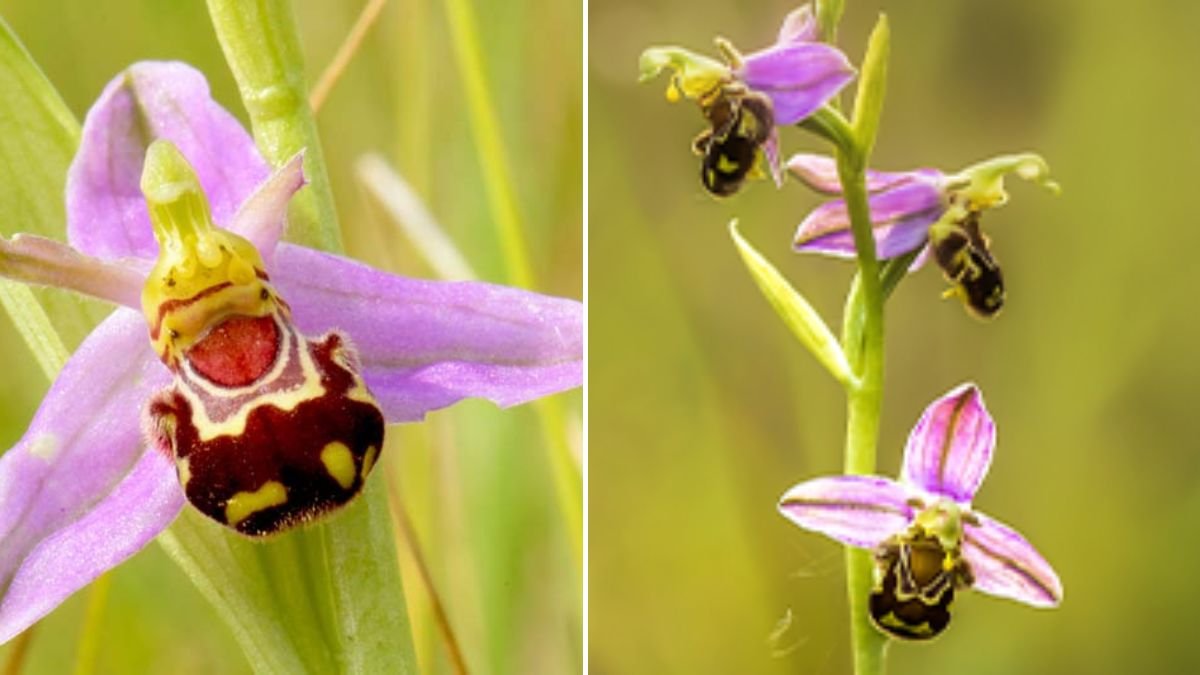
Ophrys orchids, also called bee or wasp orchids, are famous for sexual deception. These flowers mimic the appearance and scent of female insects. Male insects, attempting to mate with the flower, inadvertently collect and transfer pollen — pollinating the orchid without reward.
This Pouyannian mimicry relies on precise visual and chemical signals. The orchids’ success shows that trickery can be a highly effective reproductive strategy, with evolution fine-tuning flowers to fool specific insect species. (en.wikipedia.org)
🪨 2. Lithops — The Living Stones
In the deserts of southern Africa, Lithops, or living stones, survive by blending seamlessly with their environment. Resembling pebbles in color, shape, and texture, these succulents avoid herbivores while conserving water.
Camouflage allows them to thrive in harsh, arid habitats. Only when they bloom do their colorful flowers appear, revealing their hidden beauty. This stealthy form of deceit is a survival masterpiece. (petyolo.org)
🍂 3. Boquila Trifoliolata — The Chameleon Vine
Boquila trifoliolata is a climbing vine capable of mimicking the leaves of multiple host plants. Its leaves change in size, shape, color, and orientation to match nearby foliage.
This phenomenon, called mimetic polymorphism, likely responds to chemical cues from the host. By blending in with other plants, Boquila reduces herbivory risk and increases its survival chances, showcasing one of the most sophisticated forms of botanical mimicry. (en.wikipedia.org)
🪤 4. Rafflesia Arnoldii — The Corpse Flower
The Rafflesia arnoldii, found in Southeast Asia, is infamous for its giant blooms and foul odor. Emitting a smell similar to rotting flesh, it attracts carrion flies and beetles that pollinate the plant while searching for decaying matter.
This sapromyophily strategy turns a pungent odor into an evolutionary advantage. While humans find the smell unpleasant, it is a perfect example of chemical deception for survival and reproduction. (plantisima.com)
🪰 5. Epipactis Veratrifolia — Dual Deception
Some orchids, like Epipactis veratrifolia, mimic food sources for insects. They resemble aphids visually and chemically, attracting hoverflies that feed on aphids. While the insects attempt to prey, they collect pollen, inadvertently pollinating the orchid.
This dual-layered deception — visual mimicry plus chemical imitation — demonstrates how plants can manipulate both sight and smell to ensure reproductive success. (link.springer.com)
🪴 6. Carnivorous Pitcher Plants — Lures for Prey
Carnivorous plants like Nepenthes and Sarracenia use deception to catch insects. Their jug-shaped leaves, nectar-like secretions, and slippery surfaces lure insects seeking food or water. Once trapped, the insects provide essential nutrients like nitrogen.
These plants turn danger into sustenance using visual and chemical trickery, highlighting that deceit can serve as both defense and a source of nourishment. (britannica.com)
🦋 7. Flowers Mimicking Feces or Rot
Some deceptive orchids mimic decaying matter or feces to attract pollinators like flies and beetles. These insects, drawn to what they think is food or a breeding site, visit the flowers and inadvertently transfer pollen.
This negative mimicry — making the flower appear unappealing or inedible — is another example of plants using clever tricks to manipulate animal behavior. (nationalgeographic.com)
🌼 8. Camouflage Masters Beyond Lithops
Other plants, like Camouflage orchids and Peperomia graveolens, use subtle visual mimicry to blend into rocks, bark, or leafy backgrounds. These plants employ color, texture, and even scent cues to remain hidden from predators while still attracting pollinators.
Such sophisticated adaptations show that camouflage and mimicry are widespread survival strategies, helping plants thrive in predator-rich environments. (houseplantalley.com)
🌟 Why Botanical Deception Matters
Deception in plants is not random — it is an evolutionary strategy. By fooling pollinators, predators, or competitors, plants improve their chances of survival and reproduction. These strategies illustrate that survival is not only about strength but also about adaptation, strategy, and ingenuity.
Understanding plant deception enhances our appreciation of nature’s creativity. From orchids luring insects to succulents hiding in plain sight, these clever strategies reveal a world of biological trickery rooted in evolution. (nationalgeographic.com)
📚 Suggested Authoritative Sources
- National Geographic – The Beauty of Deceit: Plant mimicry and pollination strategies. (nationalgeographic.com)
- Wikipedia – Ophrys: Sexual deception in orchids. (en.wikipedia.org)
- Wikipedia – Boquila Trifoliolata: Leaf mimicry in climbing vines. (en.wikipedia.org)
- Plantisima – Shapeshifting Plants: Deceptive adaptations in flora. (plantisima.com)
- House Plant Alley – Mimicking Plants: Camouflage and visual trickery in plants. (houseplantalley.com)
🌿 Final Thoughts
The plant kingdom is full of crafty tricksters — from orchids that seduce insects to camouflaged succulents. These strategies show that evolution favors creativity, deception, and cunning as much as strength.
By studying these deceptive plants, we gain insight into survival strategies, pollination ecology, and evolutionary innovation. Next time you see a flower, vine, or stone-like succulent, remember: nature may be hiding a master of disguise right before your eyes.