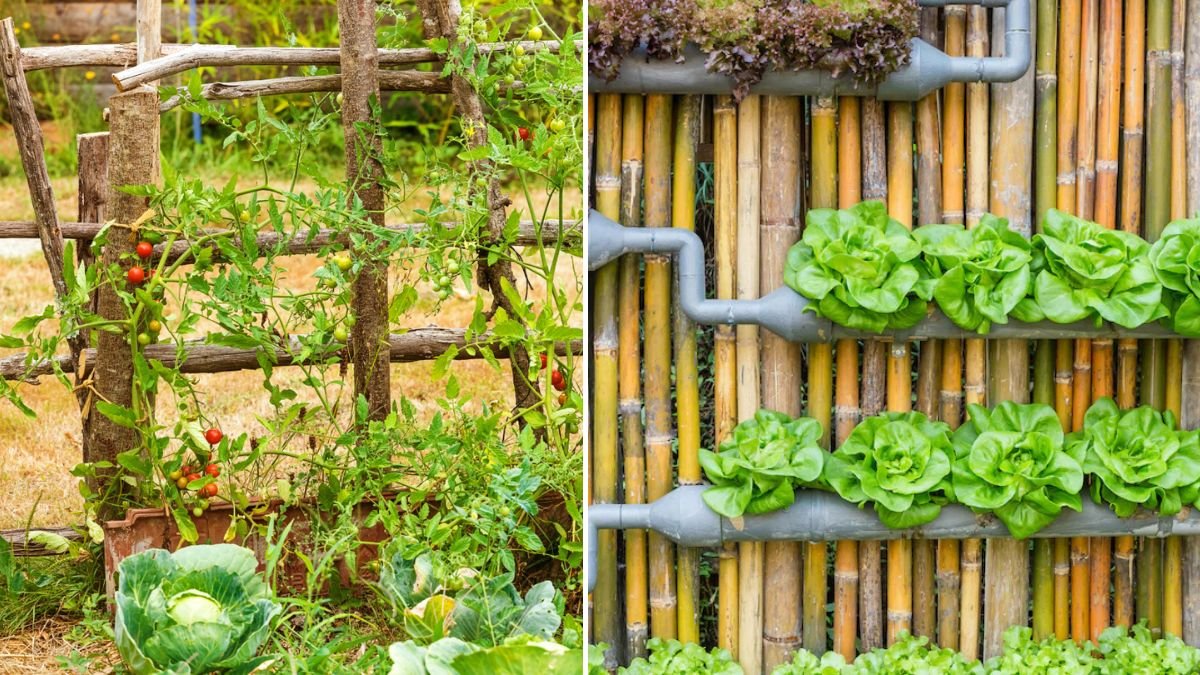

1. Cherry Tomatoes — A Vertical Garden Classic
Cherry tomatoes are the ultimate vertical gardening vegetable. Their vines naturally climb, making them ideal for trellises, cages, or string supports. Growing them vertically keeps the fruits off the soil, reducing the risk of rot and disease. Proper pruning encourages the plant to focus energy on producing more flavorful fruit.
Tips for success:
- Ensure 6–8 hours of sunlight per day.
- Prune side shoots (“suckers”) to direct energy into fruit development.
- Use sturdy trellises or cages to support growing vines.
Vertical cherry tomatoes not only save space but also produce more fruit than sprawling ground-based plants.
2. Pole Beans — Prolific Climbers
Pole beans are naturally climbing vegetables that thrive in vertical setups. Unlike bush beans, pole beans can grow several feet tall, making excellent use of trellises or poles. They produce tender, protein-rich pods throughout the growing season and require minimal ground space.
Tips for success:
- Plant seeds after the last frost.
- Provide strong supports like trellises or bamboo poles.
- Encourage vines to wrap around the support as they grow.
Pole beans are perfect for gardeners looking to maximize vertical space while enjoying abundant harvests.
3. Cucumbers — Crisp and Space-Efficient
Cucumbers grow well vertically, producing straighter, cleaner fruits compared to ground-level growth. Trellises, mesh netting, or fences are ideal supports for climbing cucumber varieties. Vertical growth also reduces pests and keeps the fruits clean, while improving air circulation around the plants.
Tips for success:
- Keep the soil consistently moist.
- Train vines along netting or trellises using soft ties.
- Regularly harvest mature cucumbers to encourage continuous production.
Vertical cucumbers are easier to manage and yield higher-quality fruit than traditional horizontal planting.
4. Leafy Greens — Lettuce and Spinach
Leafy greens like lettuce and spinach are excellent vertical garden candidates. Their compact growth habits make them perfect for pocket planters, tiered systems, or stacked containers. They grow quickly and allow for continuous harvests, making them ideal for fresh salads and side dishes.
Tips for success:
- Place them in cooler, lower panels of the vertical system to prevent overheating.
- Keep the soil evenly moist.
- Harvest outer leaves regularly to promote new growth.
Leafy greens are perfect for vertical gardeners seeking quick-growing, nutritious crops.
5. Swiss Chard — Colorful and Nutritious
Swiss chard offers vibrant colors and continuous leaf production, making it visually appealing and productive in vertical setups. It grows well in pocket planters or tiered containers and can tolerate repeated harvests.
Tips for success:
- Use well-draining soil and fertilize regularly.
- Harvest leaves individually to encourage new growth.
- Swiss chard tolerates partial shade, making it flexible for vertical gardens.
With colorful stems and robust growth, Swiss chard adds both beauty and nutrition to your vertical garden.
6. Arugula — Fast-Growing Flavor Booster
Arugula’s rapid growth and tender leaves make it ideal for vertical gardens. It thrives in pocket planters or stacked systems and can be harvested in cycles for continuous supply. Its peppery flavor is perfect for salads, sandwiches, and garnishes.
Tips for success:
- Ensure adequate light and moisture.
- Sow seeds in multiple rounds for a continuous harvest.
- Keep plants shaded during extreme heat to prevent bolting.
Arugula is a compact, flavorful addition to any vertical garden.
7. Sugar Snap Peas — Sweet Climbers
Sugar snap peas naturally climb and benefit from vertical supports. They deliver crisp pods that are perfect for fresh eating or light cooking. Growing vertically keeps vines off the soil, improves air circulation, and prevents fungal diseases.
Tips for success:
- Install netting or trellises early to encourage climbing.
- Plant after the last frost for best results.
- Maintain consistent watering to ensure pod development.
Sugar snap peas make excellent use of vertical space while providing sweet, crunchy harvests.
8. Miniature Bell Peppers — Colorful and Compact
Mini bell peppers are ideal for vertical gardens because of their compact growth and vibrant colors. They can be grown in hanging baskets, stacked containers, or vertical towers, and are highly productive in small spaces.
Tips for success:
- Provide full sunlight and rich, well-draining soil.
- Use cages or supports for taller varieties.
- Harvest regularly to encourage continuous fruiting.
Mini bell peppers are visually appealing and highly productive for urban gardeners.
9. Green Onions (Scallions) — Simple and Steady
Green onions are perfect for vertical gardening due to their small root systems and continuous harvest potential. They grow well in narrow pockets or shallow containers and add fresh flavor to a variety of dishes.
Tips for success:
- Plant densely to maximize space.
- Harvest often to encourage new growth.
- Ensure soil remains moist and fertile.
Green onions are low-maintenance, high-yield vertical vegetables that complement many meals.
10. Spinach — Healthy and Versatile
Spinach is a nutrient-packed leafy green that thrives in vertical setups. It grows quickly and tolerates repeated harvesting, making it a reliable choice for vertical garden enthusiasts. Spinach prefers cooler temperatures and partial shade, which can be achieved in multi-tiered vertical systems.
Tips for success:
- Rotate plantings for year-round harvest.
- Maintain consistent moisture for best leaf quality.
- Use shallow containers or pockets for optimal growth.
Spinach is versatile, nutritious, and perfect for compact vertical gardening spaces.
Vertical Gardening Tips for Success
To make the most of your vertical garden, follow these guidelines:
- Choose the Right Support: Trellises, netting, poles, and pockets provide essential support for climbing and compact vegetables.
- Maximize Light: Most vegetables require 6–8 hours of sunlight per day. Place sun-loving crops at the top of your vertical system.
- Manage Water and Soil: Vertical setups can dry out faster than ground beds. Use rich, moisture-retentive soil and water consistently.
- Regular Maintenance: Prune, harvest, and monitor support structures to prevent overcrowding and encourage healthy growth.
- Plant Strategically: Combine fast-growing, shallow-rooted plants with taller, climbing crops for optimal space use.
With proper care, vertical gardening can significantly increase productivity while minimizing the space needed for growing fresh vegetables.
Authoritative Sources
For more information and expert advice on vertical gardening:
- 12 Perfect Vegetables That Thrive in Vertical Gardens — The Garden Magazine (thegardenmagazine.com)
- The Best Vegetables for Vertical Gardening — The Grow (thegrow.net)
- Vegetables for Vertical Gardens — Decorwink (decorwink.com)
- Vertical Gardening: How to Grow More Vegetables in Less Space — Healthy Vegetable Gardening (healthy-vegetable-gardening.com)
Final Thoughts
Vertical gardening allows urban and small-space gardeners to grow fresh vegetables efficiently while reducing the footprint required for a productive garden. By selecting the 10 perfect vegetables that thrive in vertical gardens, you can enjoy continuous harvests, healthier plants, and higher yields. From climbing tomatoes and peas to leafy greens like spinach and arugula, vertical gardening maximizes space and makes harvesting easy and enjoyable.
Start with a few plants, provide strong support, and watch your vertical garden flourish year-round. With the right planning, even small spaces can yield abundant, nutritious vegetables.